Aster by Joshua Paris
Room 208, No. 130 Yongyuan Road
Jing’an District, Shanghai
Tel.: +86 156 1882 8656
The dishes
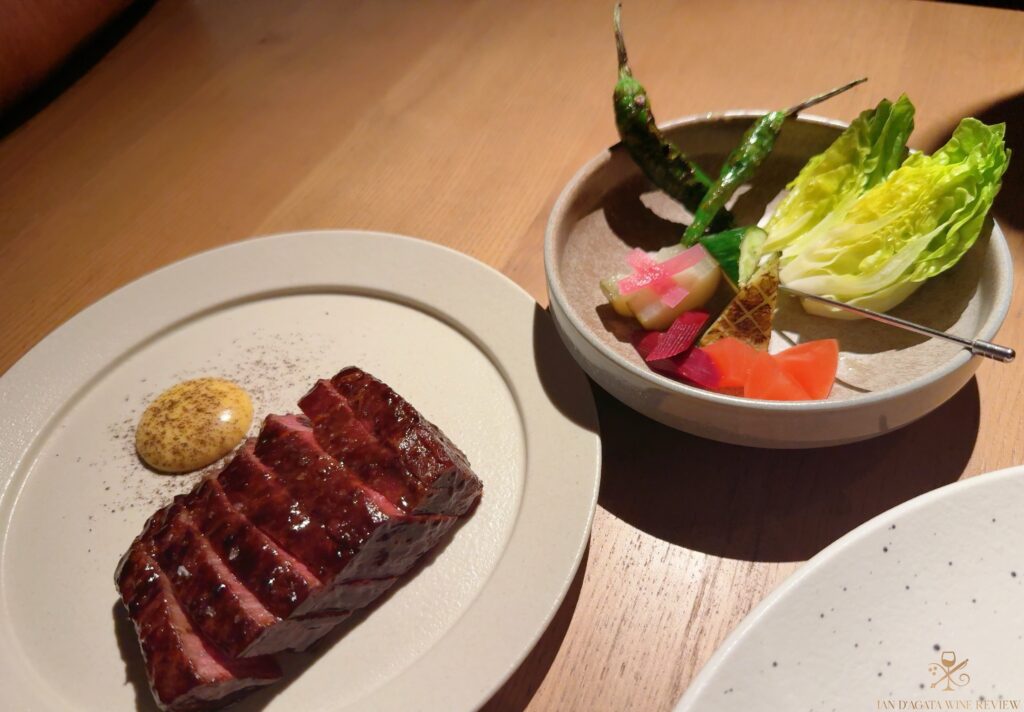
M8+ Wagyu Oyster Blade Black Garlic Teriyaki English Mustard Aioli Pickles
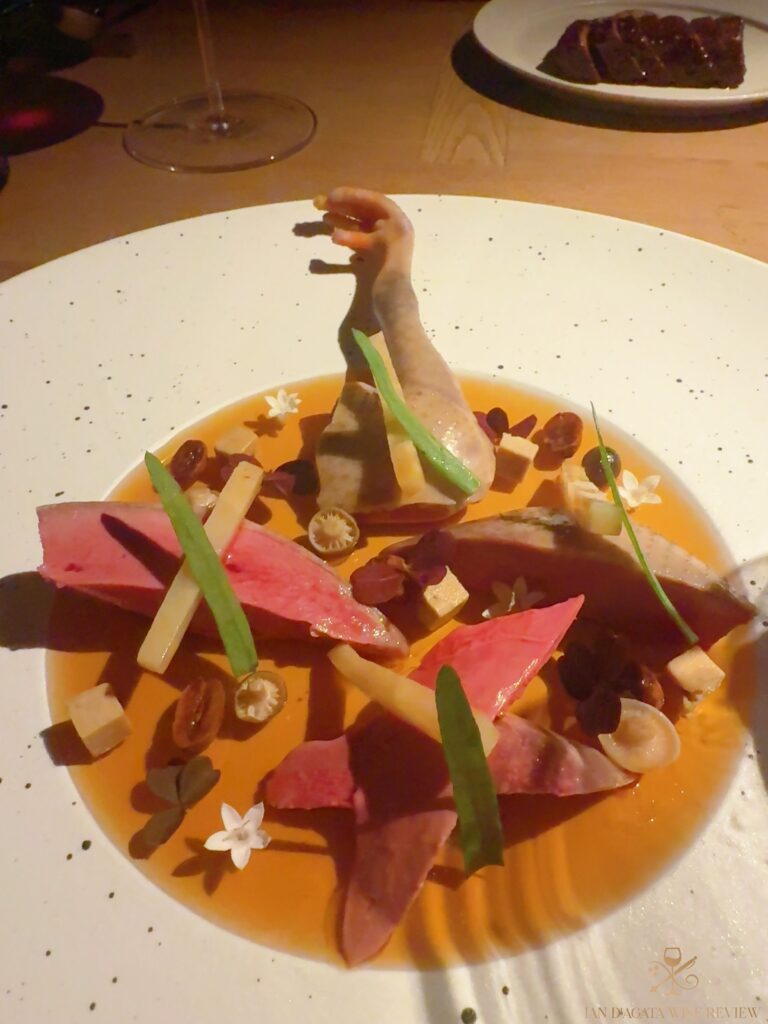
XL Huzhou Pigeon (half) Jura Vin Jaune Marinated Foie Gras Shimeji Mushroom Hazelnut
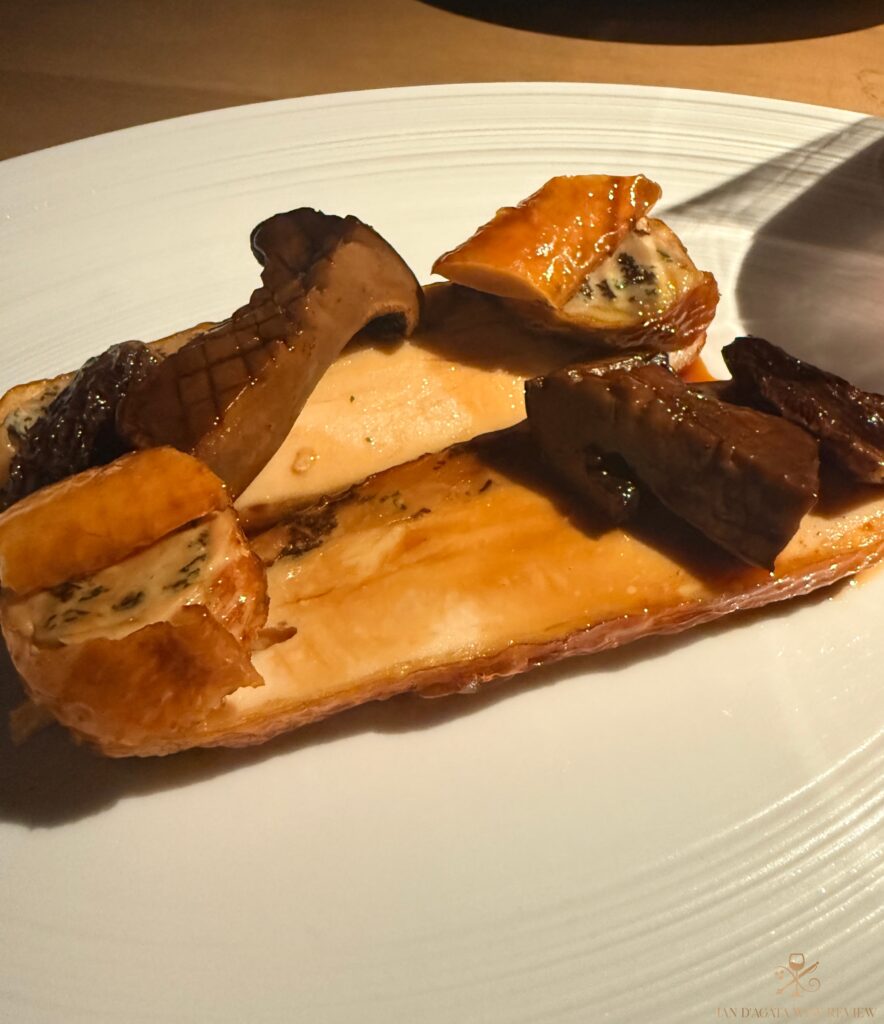
Stuffed Chicken Ceps Morels Albufera Sauce Madeira Jus
New Zeland Lamb Rack Parmesan Truffle Crust Truffle Lamb Jus
Maitake Mushroom Sherry Vinegar Parsley Shallot
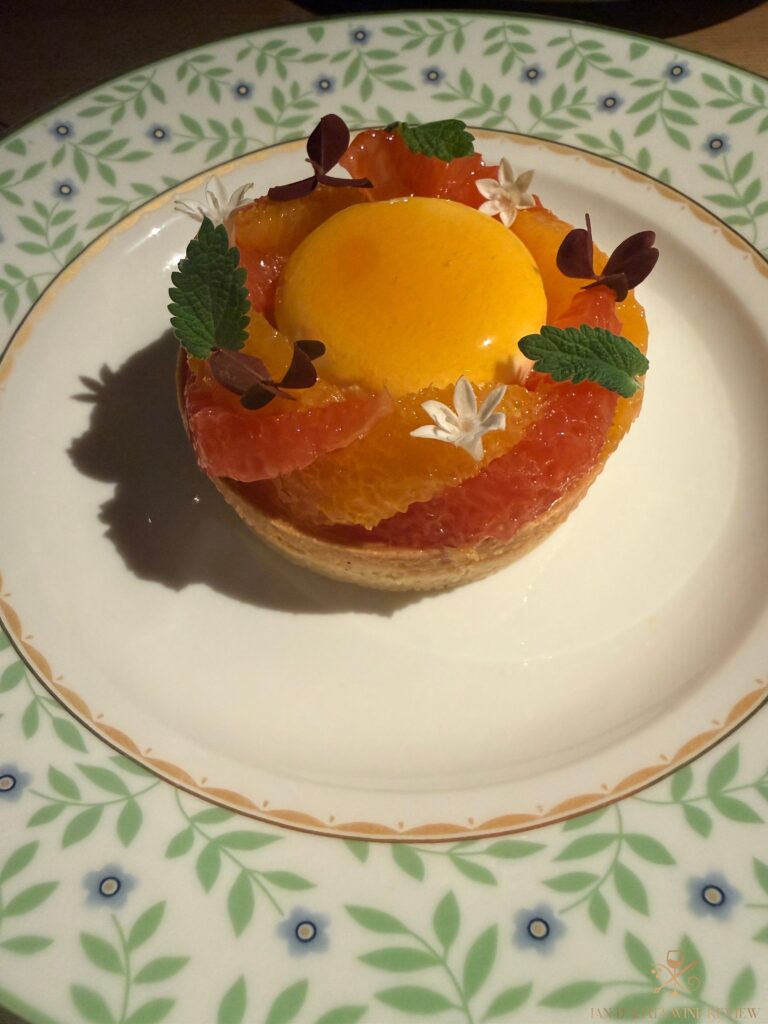
Summer Citrus Tart Oolong Parfait Passionfruit Curd Vanilla Ganache Buddha’s Hand
Shanghai has no shortage of “contemporary European” restaurants. The city is remarkably receptive to new forms of culinary expression: open kitchens, ever-changing seasonal menus, ingredients that travel across borders, and concepts that need to be explained. The real difficulty, however, has never been creating a dish that looks complex. It is allowing diners to taste the ingredient, the cooking and the flavour itself once that complexity is in place.
On Yu Yuan Road in Jing’an, Aster belongs to restaurants that handles the latter category brilliantly.
Aster works from a foundation of European technique and has deliberately chosen an à la carte format rather than a fixed tasting menu. Its chef, Joshua Paris, was formerly Executive Chef at Ultraviolet, the former three Michelin star restaurant in Shanghai that has since closed but that was for a very long time one of the four or five most famous restaurants in the world. But that background does not mean that dinner here unfolds as a theatrical narrative. If anything, it explains the kitchen’s attention to cooking, sauce and the internal logic of every dish. Aster does not seem overly concerned with proving how “new” it is; instead, it looks for a looser, more natural expression of French cooking—one that suits the rhythm of a Shanghai dinner today.
I like this format. It allows a meal to begin with a cocktail and develop slowly around what one genuinely wants to eat that evening. The wine, too, is not locked into a predetermined pairing, but can enter the table naturally as the dishes unfold.
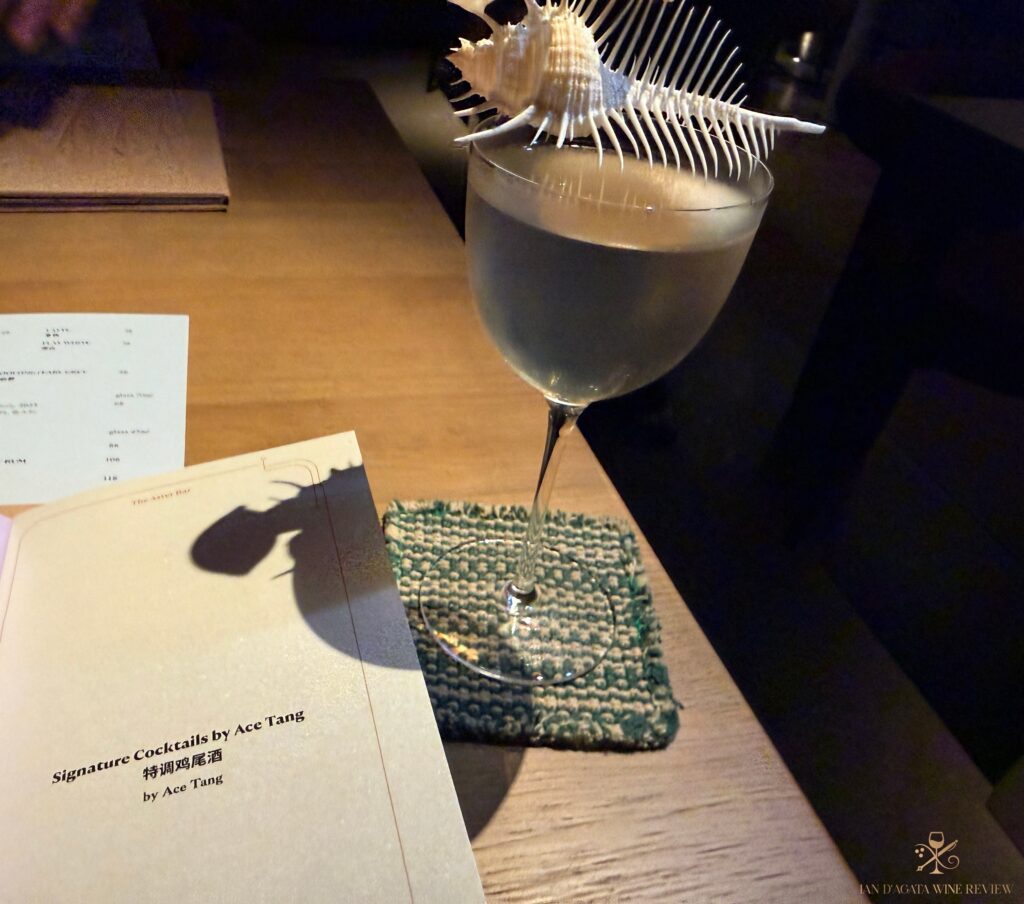
Before dinner, I ordered an Aster Martini: Ki No Bi Gin, Dassai 45 sake, orange, Dutch smoked cheese and pickled burdock, at 27% abv. This is not an easy-going aperitif. The gin provides a clear herbal backbone; the sake softens the usual severity of a Martini with a gentler rice-like fragrance and an added layer of umami. Orange prevents the drink from becoming overly serious, while smoked cheese and pickled burdock lead it towards savouriness, smoke and a subtle fermented character. It is an accurate introduction to Aster’s culinary language. European technique is the foundation, but the palate is not confined by the traditional borders of French cuisine. Ingredients from different culinary traditions are brought together not to manufacture a label of “fusion,” but to create a more complete sense of savouriness, texture and finish. The cocktail is not an isolated opening gesture. Aster clearly gives its cocktail programme serious thought: it is led by Ace Tang, formerly of The Bunker by Flask, with a list developed in collaboration with other bartenders and refreshed seasonally. For a restaurant centred on à la carte dining, this matters. A cocktail can be the prelude to dinner, but it can also become part of the overall gastronomic experience.
The menu changes regularly, but Aster’s attention to sourcing is more than a generic reference to seasonality. The restaurant works with smaller independent farms and specialist suppliers. According to the restaurant’s sourcing information, its pigeon comes from a small family farm near Lake Tai, where the birds are raised at low density and fed on natural grains. That background is not simply there to add a picturesque place name to the menu. The pigeon itself needs sufficient flavour and texture to support what follows in the same recipe: Jura Vin Jaune, marinated foie gras, camphor leaves and chicken jelly. The dish has an unmistakably French framework. Vin Jaune, with its distinctive nuttiness, oxidative character and savoury depth, gives the poultry greater dimension. Foie gras contributes fat and richness, while the chicken jelly brings the flavours back into focus, preventing the plate from becoming only about the pigeon itself. What I find is particularly effective is that richness is not treated as the sole objective. The camphor leaves bring a cool herbal lift, almost but not quite strongly camphoraceous in character, opening a small but important space within the dish. They prevent the foie gras and Vin Jaune from overwhelming the flavour of the bird. This is not merely a French poultry dish; it is an example of how local Chinese ingredients and European culinary thinking can meet without either becoming decorative.
The stuffed chicken was the evening’s most classically French dish, and the one that best illustrates why food-and-wine pairing must begin with the sauce, rather than merely the central ingredient. The Albufera sauce on the menu deserves some explanation. It is a classic French sauce for poultry, rooted in the velouté and sauce suprême family, using poultry stock as its base and enriched with cream and concentrated meat juices to add depth and a velvety texture. Traditionally, it is served with chicken, capon and other poultry dishes. At Aster, the Albufera sauce does not merely make the chicken “richer.” It forms a delicate, rounded layer around it, while the Madeira jus introduces greater vinous depth, a mature savoury note and a subtle sweetness. Ceps and morels run through the dish, balancing the softness of the poultry with their woodland character and the weight of the sauces. This may look like a chicken dish, but it is ultimately driven by mushrooms and sauce. A light white wine chosen simply because the main ingredient is chicken may not be able to meet the Madeira jus, the concentrated poultry flavours and the depth of the morels. Yet a powerful red with hard tannins would erase the detail of the bird. It was here that I decided to let a red Burgundy carry the subsequent courses: a wine with depth, but without unnecessary weight. The sautéed mushroom side dish deserves a mention of its own. It does not try to behave like a main course; it simply allows the mushrooms to be properly cooked, retaining moisture, gentle browning and their forest-like, woody character. For that reason, it became a natural continuation of the stuffed chicken. A good side dish does not compete for attention; it makes the main course feel more complete. This one did exactly that.
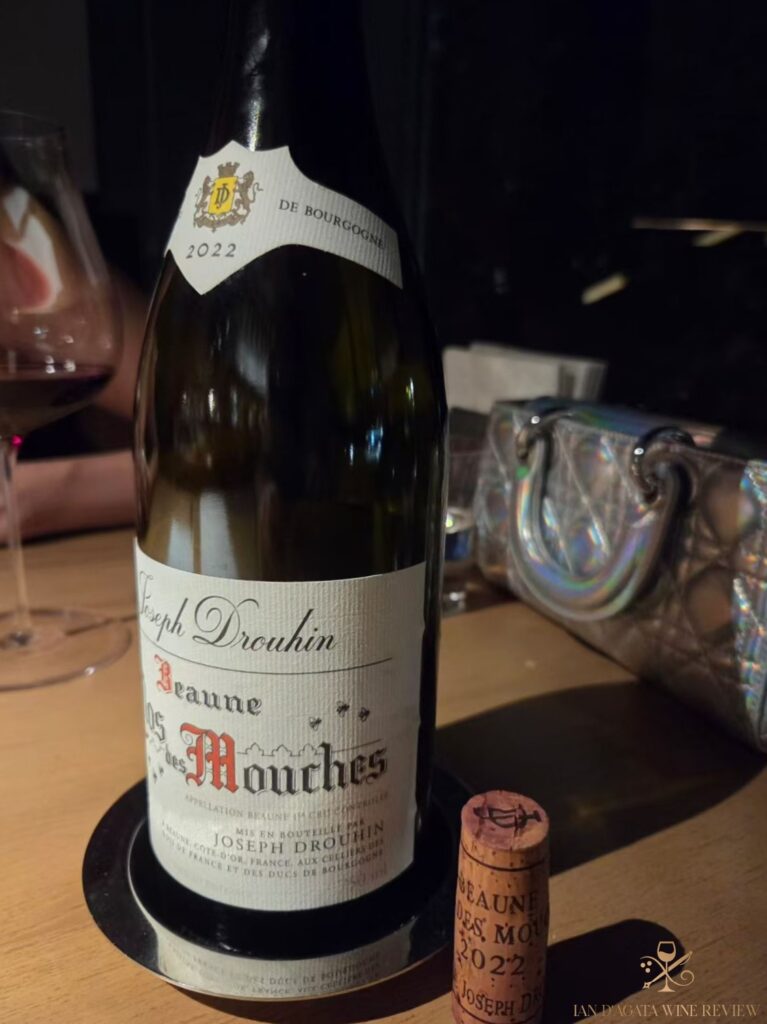
On this specific evening, the wine was the 2022 Joseph Drouhin Beaune Premier Cru Clos des Mouches Rouge. This was not a matter of finding a red wine “substantial enough” for lamb, nor of treating Burgundy as the safe choice at the table. The real reason was that the menu called for a wine able to move across mushrooms, sauce, poultry, Wagyu and charcoal-grilled lamb without forcing any of them to conform to it. Clos des Mouches Rouge is Pinot Noir. The 2022 remains youthful, with black cherry, raspberry, blackberry and violet at the centre of its aromatic profile, followed by discreet smoke, spice and liquorice. It has real flesh on the palate without becoming heavy; its acidity remains lively and its tannins are fine, yet sufficiently present to give the wine shape. It is neither as forceful as a Cabernet Sauvignon or Syrah, which could easily dominate the chicken, nor simply a light, fruit-driven Pinot Noir.
With the stuffed chicken, the point was not “red wine with chicken.” It was the way this wine responded to the Albufera sauce, the Madeira jus and the mushrooms. Its fresh acidity lifted the rounded texture of the sauces and the richness of the poultry; its silky but clearly defined tannins carried the texture of the stuffing. The wine’s smoky, liquorice-like and gradually emerging woodland notes also found a natural echo in the ceps, morels and sautéed mushrooms. In this kind of pairing, wine and food are not simply looking for matching flavours. They correct and refine one another in terms of texture and weight. The earthiness of the mushrooms gives greater depth to the aromatic profile of Pinot Noir, while the concentration of the sauces brings the wine’s structure into sharper focus. Neither is amplified to the point of losing proportion.
The Wagyu oyster blade and the charcoal-grilled lamb that appeared that evening further demonstrated that the choice of Clos des Mouches was not accidental. The Wagyu was served with black-garlic teriyaki, English mustard aioli and seasonal pickles. Black garlic contributed sweetness and fermentation-derived savouriness; the mustard aioli added spice and texture; the pickles prevented the meat’s richness from remaining in the centre of the palate. With a red wine of higher alcohol and heavier tannins, the sweetness of the black-garlic teriyaki might have exaggerated bitterness and dryness in the wine. Clos des Mouches had sufficient fruit and structure for the meat, yet retained enough acidity and finesse to leave room for the black garlic, mustard and pickles. The lamb was simply charcoal-grilled, without elaborate sauce or decoration. Its exterior had a clear char and a faintly crisp texture, while the centre remained pink and juicy. Here, the smoky, black-cherry and spice notes of Clos des Mouches naturally met the char, while its structure and refined tannins were sufficient for the fat and juices of the lamb.
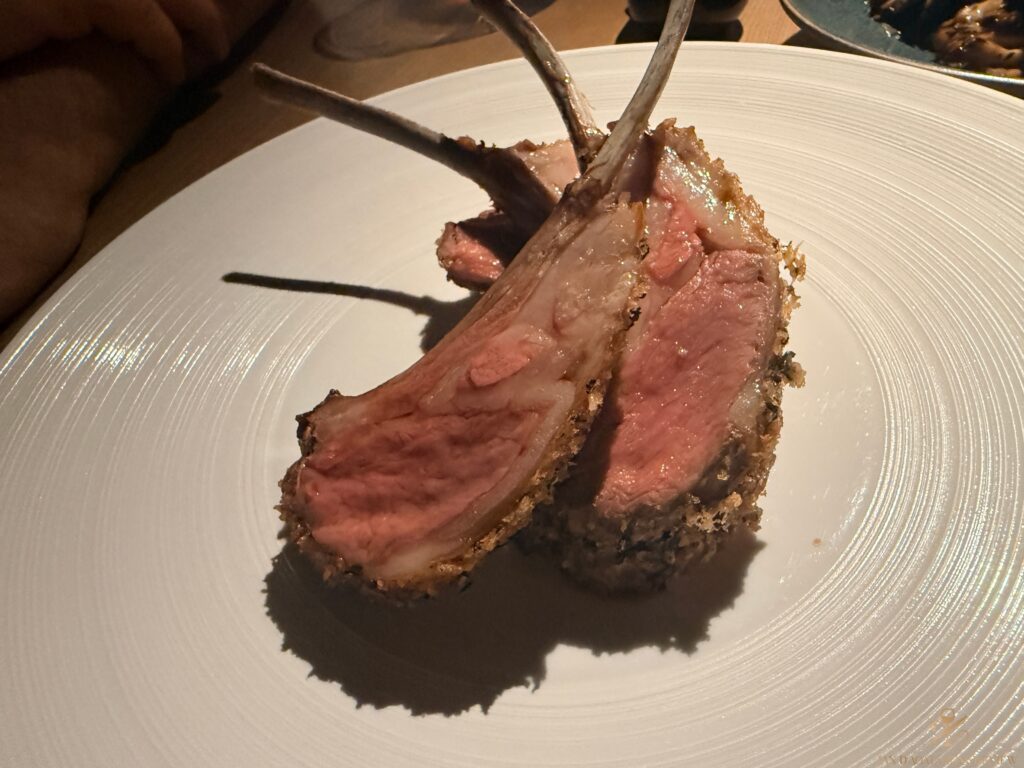
The lamb was already direct enough in expression. What the wine needed to do was extend its fragrance and texture, rather than create another, more forceful centre of attention.
That is what this bottle ultimately achieved. It did not deliver a supposedly “perfect” pairing with one course. Instead, it maintained continuity across the table—from the soft richness of mushrooms and stuffed chicken, through the fat of Wagyu and the sweet-savoury profile of black garlic, to the char and juices of lamb. It followed the changing dishes without demanding that any of them yield to it.
A citrus fruit tart provided a clear, light conclusion to the meal. After pigeon, foie gras, mushrooms, poultry sauces and charcoal-grilled lamb, a dessert built around cream, chocolate or caramel could easily have left the dinner feeling saturated. Aster’s choice of citrus was precise. The fruit’s acidity, subtle bitterness and brightness gently cut through the accumulated richness, returning the table to freshness and clarity.