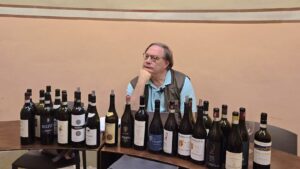
I recently spent an enjoyable moment not at a conventional winery dinner, but at what ended up being a remarkably coherent tasting journey (even though, yes, it was a dinner). The evening’s journey began with wines from different denominations and grape varieties across Piemonte, gradually narrowing its focus to Nebbiolo, and ultimately arriving at three cru wines (what are referred to officially as Menzioni Geografiche Aggiuntive or MGAs, but are for all intents and purposes large vineyard districts)—Coste di Rose, Cannubi and Sarmassa—from the same 2019 vintage and the same commune of Barolo.
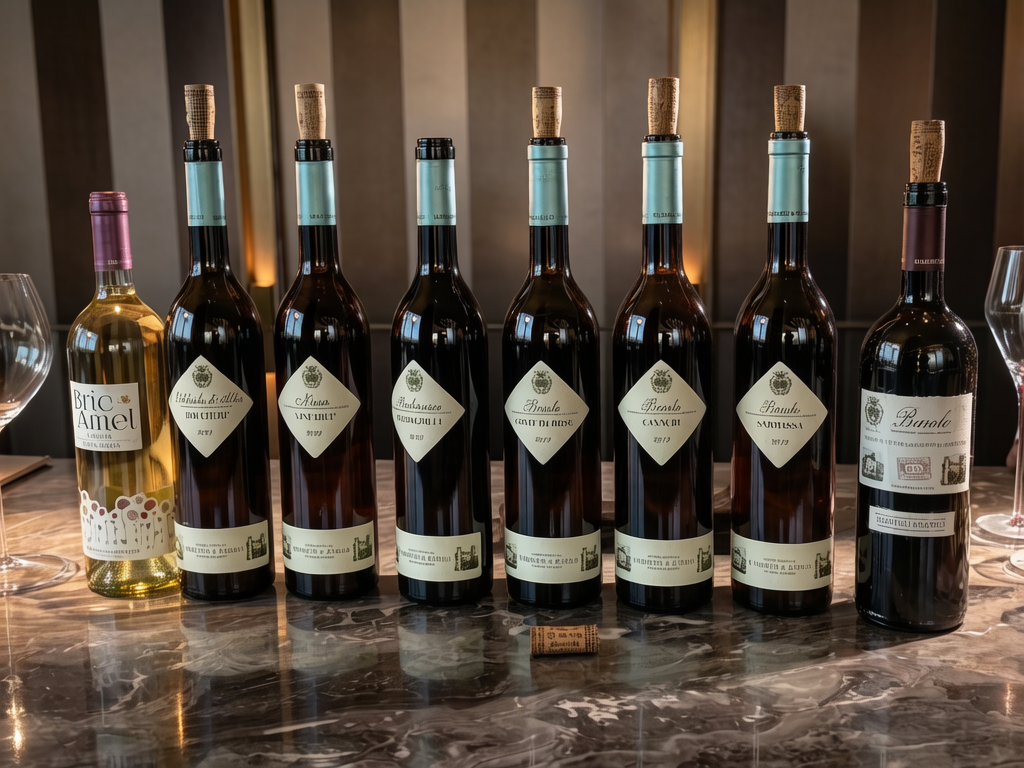
From Bric Amel and Nebbiolo d’Alba Roccheri, through Vinearei from Nizza in Monferrato and Serragrilli from Neive, the geographical frame became progressively tighter. The three 2019 Barolos formed the evening’s most revealing comparative flight: when producer, grape variety, vintage and even commune remain constant, how much difference can individual sites leave in the glass?
The final wine, the 1974 Barolo Riserva Limited Edition, shifted the coordinates altogether. If the three 2019 MGAs were about place, this Barolo, after more than half a century, was about time. It was a journey worth doing.

From Historic Cellars to Individual Sites
The history of Marchesi di Barolo is closely intertwined with that of Barolo itself. Located in the heart of the village of Barolo, the estate traces its history to the Falletti family. In the early nineteenth century, Giulia Falletti Colbert, a noblewoman far ahead of her time and a born communicator, played an important role in advancing local wine production and expanding the underground cellars, providing more stable conditions for the fermentation of Nebbiolo. As fermentation could proceed more completely, Barolo gradually evolved away from the residual-sugar styles of the past toward the dry wine we recognize today (before her arrival, Barolo was fermented outside in conditions that would easily allow for stuck fermentations).
Marchesi di Barolo’s connection with royalty also forms part of the historical background behind Barolo’s later reputation as “the wine of kings and the king of wines.” During the nineteenth century, the Falletti family’s Barolo had already reached the Savoy court and aristocratic circles in Turin. The story of Giulia Falletti sending a vast quantity of Barolo to the royal capital, transported in barrels by hundreds of ox-drawn carts, has been retold many times. Accounts differ as to the exact number involved, but Barolo’s connection with the royal court was more than a marketing invention or communicator’s stroke of genius. As early as 1834, the botanist Giorgio Gallesio recorded that the Marchesi di Barolo aged the wine for extended periods and sent it to the court in Turin. These royal and aristocratic networks helped Barolo establish a reputation during the nineteenth century that reached far beyond its place of origin. What ultimately allowed that reputation to endure, however, was Nebbiolo itself: its structure, its capacity for long aging and its ability to articulate differences of place.
In 1929, Pietro Abbona and his family acquired the historic Marchesi di Barolo cellars, beginning a new chapter under the Abbona family. Nearly a century later, the estate has reached its sixth generation. The historic cellars remain in the village of Barolo, while the vineyards extend across Barolo, the Langhe, Roero and Monferrato. The Piemonte represented by Marchesi di Barolo therefore reaches well beyond Barolo itself.
For a producer with such a long history, what is particularly interesting is its approach to individual sites. Vineyards are managed separately, with harvest dates determined according to altitude, exposure and ripening progress. Once in the cellar, individual parcels continue to be vinified independently. Cannubi, Sarmassa and Coste di Rose, as well as Serragrilli in Barbaresco, are bottled under their individual geographical names; fruit from other sites may instead contribute to blended cuvées.
There is no simple hierarchy between these two approaches. Assemblage is fundamental to the traditional conception of Barolo: different vineyards can complement one another to produce a more complete and balanced wine. A single cru, by contrast, narrows the lens and allows the personality of one specific place to emerge more clearly. This is precisely what made the side-by-side tasting of the 2019 Coste di Rose, Cannubi and Sarmassa so instructive. All three came from the same producer, vintage and grape variety, and all are located within the Commune of Barolo. Once these variables are held as constant as possible, attention naturally turns to the three MGAs themselves. The 1974 Barolo Riserva then introduced another dimension. The three 2019 Barolos showed how Nebbiolo can articulate place; the 1974 showed how Barolo can articulate time.
The 2023 Bric Amel is a wine that morphed from a blend to monovariety Sauvignon Blanc. Bric Amel was previously bottled as Langhe DOC Bianco, a blend of Arneis, Chardonnay and Sauvignon Blanc, with the proportions varying according to vintage. The 2023 tasted here, however, is 100% Sauvignon Blanc and bottled as Langhe DOC Sauvignon. Where earlier versions relied on three white varieties to build body and aromatic complexity, the 2023 focuses the expression entirely on Sauvignon Blanc. With the 2021 Nebbiolo d’Alba Roccheri, we entered the realm of Nebbiolo. In other words, Roccheri moved the tasting from white wine into Nebbiolo, though not yet into Barbaresco or Barolo. These vineyards lie at approximately 290–345 meters above sea level, on east-, southeast- and south-facing slopes. The geological foundation belongs to the Sabbie di Asti (Asti Sands), with soils composed of approximately 41% sand, 48% silt and 11% clay. The relatively high proportion of sand is associated with lower water retention and fertility. The Nebbiolo undergoes temperature-controlled fermentation, with gentle rimontaggio used to achieve gradual extraction, followed by malolactic fermentation and approximately one year of aging in thirty hectoliters Slavonian oak casks. Its significance in the context of the evening was that it established the first Nebbiolo reference point. The same variety would subsequently appear in Serragrilli in Neive (Barbaresco denomination) and then in Coste di Rose, Cannubi and Sarmassa of the commune of Barolo. As the geographical frame narrowed, the focus shifted progressively from “Nebbiolo as a variety” toward “how different places express Nebbiolo.”
A whole new world and framework was provided by the outstanding 2021 Vinearei Nizza, a Barbera wine that expresses its core terroir extremely well. Centered around Nizza Monferrato, Nizza is a DOCG based exclusively on 100% Barbera. Its emergence as one of Piemonte’s most important sources of high-quality Barbera reflects not only stricter production regulations but also its natural environment. Nizza lies within the Pliocene sedimentary basin of Asti, an area that millions of years ago was under the sea. Its rolling hills today are composed of varying combinations of marl, sand, silt, clay and sandstone, with soils generally containing calcium carbonate. The hilly landscape provides natural drainage, while well-exposed slopes give Barbera the sunlight and warmth necessary for full ripening. This is particularly important for a naturally high-acid variety: physiological ripeness can advance while acidity continues to provide a structural backbone. The fruit for Vinearei comes from the territories of the towns of Castelnuovo Calcea and Agliano Terme. The former commonly features silty-loam and sandy-loam soils, while the latter includes areas with higher proportions of silt and clay. Vinearei’s soils are approximately 11% sand, 58% silt and 31% clay—a relatively fine-textured composition with low sand and substantial silt and clay. The vineyards sit at roughly 170–200 meters and are predominantly south- to southwest-facing. Compared with sandier soils, these finer-textured soils offer greater water retention and potentially more stable conditions during ripening. Research into Nizza’s different soil types has also associated areas in which silt and clay are important components with greater structure, aromatic complexity and aging potential. Beyond natural conditions, the Nizza regulations impose additional qualitative selection on Barbera. In addition to requiring 100% Barbera, they set stricter parameters governing vineyard location and exposure, yields, ripeness and aging. The objective is not to turn Barbera into a massively tannic or heavy wine. Rather, it is to allow this naturally high-acid, relatively low-tannin variety to develop greater fruit concentration, mid-palate structure, depth and aging capacity through full ripening. Vinearei is hand-harvested around mid-September, fermented at approximately 26°C and macerated for around eight days before aging in a combination of French oak barriques and large Slavonian oak casks. The use of different vessel sizes helps integrate structure and texture without allowing oak to obscure Barbera’s fruit and acidity. The key to high-quality Nizza, therefore, is not simply “greater ripeness” or “more power.” The terroir provides conditions for complete and consistent ripening; Barbera’s naturally high acidity preserves freshness; stricter appellation standards increase fruit concentration; and élevage completes the integration of the wine’s structure. The objective is ultimately a wine that is ripe without being overripe, concentrated yet still vibrant, with sufficient depth and length. This is how Nizza can take Barbera beyond a wine defined primarily by vivid acidity and fruit and into a realm of greater structure, complexity and aging potential. The 2020 Barbaresco Serragrilli, from a Neive cru, took us to a more precise expression of Nebbiolo. Serragrilli lies in Neive, in what Ian D’Agata has classified as the northeastern sector of the Neive commune’s territory in his brand-new upcoming book on Barbaresco, the follow-up to his previous huge tome on Barolo (Barbaresco Terroir: Grapes Crus People Places, a magnum opus of over 500 pages in length that covers Barbaresco and its wines like has never been done before, will be out on October 15, 2026 at amazon.com). If Barbaresco as a wine is often considered somewhat earlier-drinking and less imposing in structure than Barolo, Neive frequently represents a relatively powerful and structured side of Barbaresco. Ian D’Agata has described Neive as the Barbaresco commune generally giving -with caveats- the more powerful and structured Barbaresco wines of all, while emphasizing that geological and stylistic differences among individual MGAs within Neive remain substantial. The commune therefore provides only a broad geographical framework; meaningful interpretation ultimately has to return to the individual site. Marchesi di Barolo’s Serragrilli lies at approximately 225–245 meters on predominantly southwest-facing slopes. The soils derive from marine Saint’Agatha Fossil Marls and consist of approximately 25% sand, 53% silt and 22% clay, with around 10% active limestone. Compared with Roccheri, the proportion of sand is lower and those of silt and clay higher, resulting in an overall finer soil texture. Serragrilli undergoes temperature-controlled fermentation with gradual extraction through remontage. Approximately 80% of the wine is aged in 30-hectoliter Slavonian oak casks and 20% in French oak barriques. The two vessel sizes influence the pace of maturation and texture differently: large Slavonian oak favors slow oxygen exchange and structural integration, while barriques provide a greater wood-to-wine ratio and can contribute further to mid-palate texture and tannin development. In the glass, however, oak did not dominate the wine; the expression of Nebbiolo and Serragrilli remained clear.
Its role in the sequence of wines tasted on this day was equally important. Roccheri had provided a relatively direct view of Nebbiolo’s varietal character; with Serragrilli, the tasting entered the territory of Nebbiolo × specific site. The subsequent move into Coste di Rose, Cannubi and Sarmassa would reduce the variables even further: same producer, same grape, same 2019 vintage and same Comune di Barolo, with only the MGA changing. Serragrilli therefore served as a bridge into the three Barolos—a transition from varietal expression toward the differences between specific sites.
One Comune, Three MGAs Within 900 Meters of each other
With the three 2019 Barolos, the scale of observation became smaller still. Coste di Rose, Cannubi and Sarmassa all lie within the Comune di Barolo. The three crus are remarkably close to each other in terms of distance, but their geography is quite different. While the greatest distance between them is only around 900 meters, they differ in exposure, elevation and soil composition. More importantly for this tasting, all three wines came from the 2019 vintage and were made by the same producer from 100% Nebbiolo. This created an unusually useful terroir comparisonas it eliminated possible confounding variables: same producer, same variety, same vintage, same comune, and sites separated by less than a kilometer. Clearly, with so many variables reduced, the differences among the MGAs themselves become the focus.
Coste di Rose lies at approximately 280–310 meters on east-facing slopes, with vines averaging around 35–45 years of age. And while its soils were formed during the Tortonian Stage of the Miocene Epoch, its lithology is not what you’d expect, that is the Saint’Agatha Fossil Marls. In fact, the vast majority of the cru’s lithology is that of the Diano Sandstones, with only a very small percentage being of Saint’Agatha Fossil Marls of the sandy type (which are very different from, and give very different wines from the other two types, the typical and laminated). Soils analysis shows the winery’s vineyard soil in Coste di Rose contains approximately 35% sand, 38% silt and 27% clay, with around 7% active limestone. Of the three sites, it has the highest proportion of sand, which is not surprising given what I just told you about the lithology being of Diano Sandstone and sandy type-Saint Agatha Fossil Marls (for more information on this fascinating subject see the definitive 2021 text ever written on Barolo by Ian D’Agata and Michele Longo, Barolo Terroir: Grapes Crus People Places (amazon.com). At the same time, Coste di Rose’s soil has a better than anticipated water-retention capacity and fertility capacities, so describing the site simply as “sandy” would be misleading; nor should its higher sand content automatically be equated with lighter or more aromatic wine. In fact, the Diano Sandstone lithology, which is typical of the communes of Monforte d’Alba and Castiglione Falletto is associated with much more structured and tougher Barolos than those commonly made in the territory of the commune of Barolo. Which also tells you a lot about what to expect from any Barolo from Coste di Rose.
Nearby Cannubi, an agglomeration of different Cannubi-something vineyards (including cannubi Boschis, Cannubi Valletta and Cannubi Muscatel) nowadays referred to mostly as Cannubi only, lies at approximately 275–320 meters, has exposures ranging from east and southeast to south, with vines averaging 35–40 years. Its soils are likewise closely associated with Saint’Agatha Fossil Marls, but their composition changes to approximately 29% sand, 46% silt and 25% clay, with around 10% active limestone and moderate water retention and fertility. In terms of texture, Cannubi sits almost between the other two sites: less sand than Coste di Rose but more than Sarmassa, with the reverse pattern for silt.
At Sarmassa, the shift becomes still more pronounced. The vineyard lies at approximately 270–285 meters on southeast-facing slopes, with vines averaging around 40 years. Its soils contain approximately 15% sand, 60% silt and 25% clay, with around 11% active limestone and relatively high water-retention capacity. Among the three, Sarmassa has the lowest sand content, the highest proportion of silt and the highest active-limestone level. Sarmassa is an extremely complicated vineyard site, in fact one of the most complicated of all Barolo: it is genuinely hard to understand for those who do not spend a great deal of time in Barolo, and superficial analyses derived from reading poorly written website and magazine articles, and unfortunately some wine tastings too, only leave people with simplistic and often erroneous impressions about what is one of the Barolo’s denominations fifteen best sites of all. Genrallly, what distinguishes Sarmassa from the other two is more clay in the soil, but clay percentages vary from section to section of Sarmassa. Importantly, at Marchesi di Barolo their vineyards in these three crus feature soil clay percentages that are in fact remarkably similar: approximately 27% at Coste di Rose and 25% at both Cannubi and Sarmassa. The more significant changes concern the relationship between sand and silt, active limestone, exposure and water availability. Moving from Coste di Rose to Cannubi and then Sarmassa, sand falls from 35% to 29% and finally 15%, while silt rises from 38% to 46% and then 60%.
The three MGAs therefore offer a fascinating study at a micro scale: less than one kilometer does not mean identical terroir. The underlying geology may be related, but differences in exposure, elevation, soil texture and water conditions are sufficient to create three distinct growing environments. The three wines follow a broadly similar Barolo winemaking logic. Nebbiolo undergoes temperature-controlled fermentation and progressive extraction, followed by extended maturation in wood and bottle to integrate structure and tannins. The point is not to exaggerate site differences through radically different winemaking regimes, but rather to allow each site to speak through a broadly consistent winemaking language. The most interesting question, therefore, is not “which soil should produce which flavor?” It is whether three sites so close to one another, separately bottled by the same producer from the same variety and the same vintage, ultimately produce clearly distinguishable wines in the glass. Tasted side by side, the differences among the three 2019s were particularly clear: Coste di Rose reaches upward, Cannubi occupies the center, and Sarmassa reaches downward. One is the most open, floral and light-footed; another the most balanced and complete; the third the most concentrated, deep and powerful. Yet all three share two striking characteristics: remarkably fine tannins and long, layered finishes that continue to evolve in the glass.
Finally, with the 1974 Barolo Riserva and its Fifty-Two Years of Time in bottle, we broached another wine tasting scenario altogether. With a Barolo of this age, vintage conditions matter, but after more than half a century, the way a bottle has been stored can be equally decisive in determining what reaches the glass. In fact, this 1974 Riserva was bottled in the spring of 1980 and had remained in the winery’s possession ever since. Importantly, it had been recorked twice, first in the summer of 1997, and then again in April 2010. Clearly, those two recorkings are themselves worth recording. Natural cork deteriorates with age, increasing the risk of leakage and excessive oxygen ingress over very long periods. Inspecting and replacing the corks reflects the estate’s ongoing and careful management of its old-vintage stocks. Also very important, the bottle tasted came directly from the winery cellar. With mature wines, such clearly documented provenance can be more important than simply seeking out a celebrated vintage. The temperature, humidity, transportation and storage conditions a bottle has experienced over several decades can profoundly influence its condition today. Direct winery provenance substantially reduces the uncertainty surrounding that history.
The 1974 Barolos turned out to be very good to outstanding wines: it was clearly the best vintage of the decade after 1971, 1978, 1970 and possibly on a par with 1979, a year of very different wines. In fact, the 1974 is not a Barolo vintage whose performance can simply be predicted from its reputation. It was not an easy growing season, and final quality depended considerably on vineyard conditions, harvest decisions and producer selection. Clearly, marchesi di Barolo had a very good winemaker working in the cellar at the time, but opening a Barolo Riserva with impeccable provenance and two documented recorkings after 52 years therefore raises a more interesting question than whether the wine is simply “still drinkable”: how much complexity has time created, and how much life has survived alongside it?
The wines in this tasting
All the wines in this report were tasted in Shanghai on September 13, 2026. I was happy to attend a Marchesi di Barolo dinner in Shanghai presented by its Chinese importer, Maiora, with winery representative Alex in attendance.