Not long ago, after reading our article on Chengdu, a winery contacted us with a direct question: how can we enter the Chinese market? The estate was looking for strategic consulting to map an appropriate route into China and identify the right importer.
At first glance, this may seem to be a simple question: but in reality, finding an importer is a matter of market judgment. China cannot be understood through an importer list, a round of emails, or a brief visit. Most everybody tries to go that route and it is doomed to fail every time. Before choosing a partner, a winery needs to understand where its wines sit in the market; which cuvées generate real interest; whether their price, story and positioning are clearly understood; and what questions the market will ask about volumes, channels and long-term objectives.
For quality-focused wineries, a purpose-built trade show can therefore be an effective first step into China. Unlike the prevailing thinking of many misguided individuals, the value of a truly successful trade show does not lie in the number of bottles opened and glasses poured, but in the quality of market feedback it generates and the foundation it creates for subsequent partnerships.
A trade show is not foot traffic, but curated market access
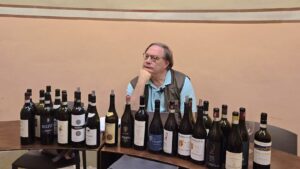
Our events do not place wineries into a single large tasting. Each element is designed to serve a different market purpose. The Ian D’Agata Wine Academy’s Trade Masterclasses are intended for carefully selected trade professionals. Their role is not simply to introduce wines, but to establish a professional understanding of denomination, grape variety, style and estate positioning before importers, distributors and sommeliers assess commercial potential. For a quality-focused winery, professional guidance is not the opposite of sales; it is the condition that allows sales to be built on quality and knowledge. Nobody buys something they know or understand nothing about.
For wineries that already have an importer in China, the B2C element serves the next stage of brand development: increasing consumer visibility, creating direct-to-consumer contact and gradually building a clearer market position. It does not replace an importer’s channel work; it helps the brand and its importer develop a stronger understanding of the market together.
We structure our Walk-around Tasting sessions around approximately 80% paid-ticket attendees and 20% targeted invitations. Unlike many shows that rely on free entry to increase footfall, we want the majority of attendees to be people who have actively chosen to pay for quality and experience—precisely the consumer group that quality wineries need to reach. The remaining 20% are invited selectively: sommeliers from Michelin-starred restaurants, distributors, key opinion leaders, wine-industry organisations, restaurant owners and buyers. This ensures both professional reach and wider market influence. Clearly, it helps that we are credible in what we offer and have the recognized experience of decades in wine writing, communication, and events organization. Ask yourself how many who the same can say that.
This approach undoubtedly requires more work: audience screening, targeted invitations, content development and detailed on-site execution. But it is the cost of building a high-quality event. Nor does communication end when the event closes. Through domestic and international media and content channels, we continue to share the wineries, wines and outcomes, giving an on-site encounter a longer life in the market.
Professional endorsement helps quality be understood correctly
When an overseas winery first enters China, it is entering a market that may not yet know its background. Importers will naturally taste and judge independently, but at the first encounter they also need a credible professional context through which to understand a wine’s quality, style and positioning.
Drawing on Ian D’Agata’s long-standing tasting and research experience, and on the professional interpretation of regions, terroirs and winemaking during our events, wineries are not simply displayed without context. They are presented within a framework that enables their quality to be understood accurately. This professional endorsement does not replace an importer’s commercial judgment; it provides a reliable starting point and gives subsequent discussions a more solid foundation.
Importer matching begins after the show
Since VINO 100 ended in May, we have successfully facilitated matches between five wineries and Chinese importers of the ten that were actively searching for one or wishing to change (plus a sixth of the ten added an importer to the one they already had). These results were not the product of a chance encounter on the day of the show; they came through continuing follow-up, communication and matching after the event.
My ability as a CEO to make a well-grounded judgment in these matters is not because of a long list of wineries attending. It comes from the specific knowledge built through the show and the relationships that continue afterwards: each estate’s style, price range, volumes, export readiness, market priorities and long-term objectives. The relationship created through a trade show also makes it possible to judge which wineries are not only suitable in product terms, but are more likely to form lasting partnerships in terms of brand positioning, channel direction and shared expectations.
When an importer brings us a specific brief, the recommendation is therefore not a superficial match by region, grape variety or price. Our team continues to follow the categories, styles, price points and channel opportunities importers are seeking, and proactively recommends the right wineries when a genuine fit arises. For a participating estate, the end of the event does not mean the end of the service; it marks the transition from an initial market encounter to a period in which it can continue to be seen and introduced properly.
Two platforms for different needs
Bottle Atlas is an international wine show designed for international quality-focused wineries that wish to explore China or strengthen an existing market presence. It is open only to a finite number of wineries from one specific country. It places an estate in a real competitive context across countries, appellations, styles and price points, while providing layered professional, B2B and B2C market contact.
VINO 100 is focused on Italian wineries. Italian wine cannot be treated as a single category; though fascinating, it is far too complex to do so. Its regions, indigenous grape varieties, appellation systems and stylistic differences all need to be understood in a clear context. The platform allows Chinese professionals to compare different areas and producers more effectively, while giving Italian estates a more precise setting in which to discuss their own market positioning.
The two events serve different groups of wineries but follow the same logic: first establish quality recognition through professional expertise; then obtain feedback through curated market contact; and finally use continued consulting and importer matching to give a single participation the chance to develop into a lasting market relationship. For many out there, that’s easier said than done.
That is where a good trade show becomes truly valuable for a quality-focused winery looking to enter into or strengthen its presence in China. It is not simply a matter of manning a booth; it is about having a clearer, more credible and more sustainable route into the Chinese market.