
Dong Ping Chao in Shanghai: from a Historic Villa to the Flavours of Chaoshan

by Yumi Liu

Dong Ping Chao

No. 1 Dongping Road, Xuhui District

Shanghai 200031China
Tel: +86 21 5888 8790
The Dishes

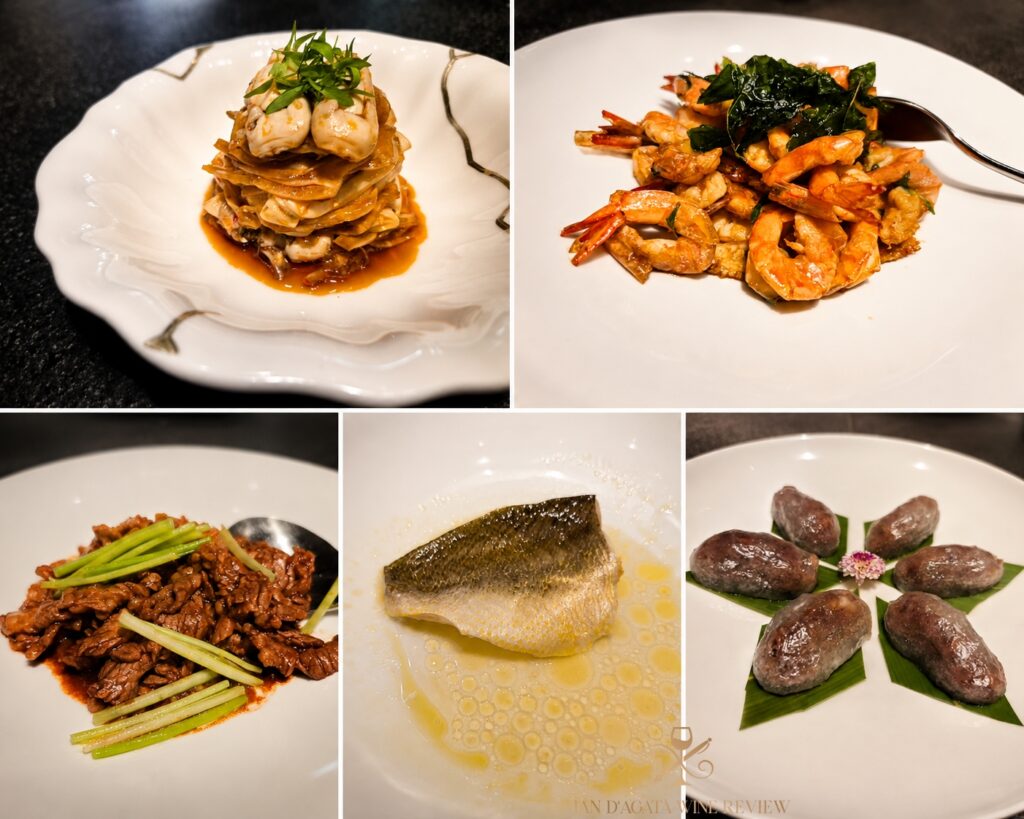
Fermented bean curd pickles, threadfin fish “rice”, deboned braised duck tongue, dressed moringa shoots
Stir-fried crab meat with hasma
Night-fragrant flower and shredded bamboo shoot soup
Steamed yellow croaker with chicken broth, prawns stir-fried with jinbuhuan, beef with Chaoshan satay sauce, seasonal greens
Chaoshan red bean guo, sweet taro purée with pumpkin
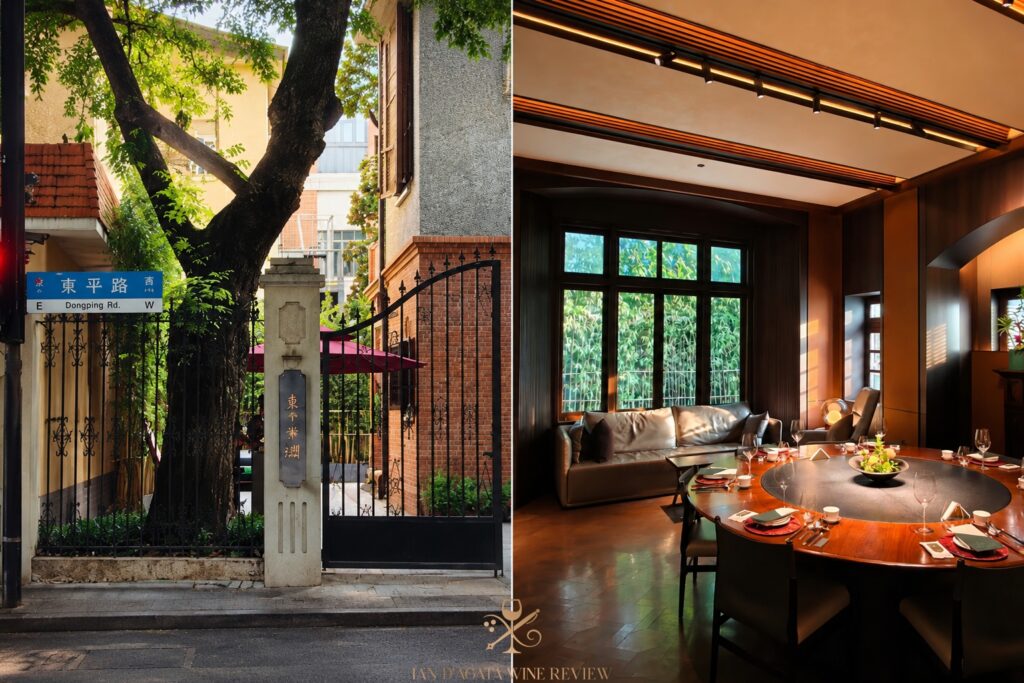
Dong Ping Chao is housed in a historic garden villa on Dongping Road in Shanghai’s Hengshan–Fuxing Road Historical and Cultural Area in its Xuhui District. It is one of the city’s best-preserved neighbourhoods, brimming with early twentieth-century garden residences and historic urban fabric. Plane-tree-lined streets, low-density villas and a noticeably quieter scale of city life give this part of Shanghai a character quite distinct from the modern metropolis around it.


The restaurant itself occupies No. 1 Dongping Road, a garden residence whose history dates back more than a century and which underwent subsequent alterations and extensions. Red brick, timber details, a private garden and the domestic proportions of the rooms still retain something of its original residential character. Rather than simply choosing an “old Shanghai villa” as a decorative setting, Dong Ping Chao feels as though it has inserted itself into an existing piece of the city’s history.

The Cuisine

Rather than generic renditions of Cantonese and Sichuan cuisines known the world-over, Dong Ping Chao specializes in a cuisine that originates in the eastern Guangdong region encompassing Chaozhou, Shantou and Jieyang. Traditionally considered an important branch of Cantonese cuisine, and commonly referred to as Teochew or Chaozhou cuisine, it nevertheless possesses a highly distinctive culinary language shaped by its geography, local produce and long-established eating traditions.

To understand Chaoshan cooking, one first has to understand its idea of freshness. Freshness here does not mean blandness. Rather, it is about allowing the intrinsic character of an ingredient to remain clearly defined. With fish, prawns, crab and shellfish in particular, relatively direct techniques such as steaming, poaching and blanching are less about adding flavour than about controlling temperature and texture with precision.

And yet, there is another quite different side to Chaoshan cuisine. Master stocks, pickling, fermentation, fish sauce, Puning soybean paste, satay sauce, galangal and local basil known as jinbuhuan can all produce flavours that are remarkably assertive. This coexistence is what makes the cuisine particularly interesting: on one side, an almost restrained respect for the natural taste of ingredients; on the other, a seasoning culture with an unmistakable regional identity. Dong Ping Chao’s menu unfolds somewhere between these two poles.

The starters move through several quite different flavour registers: fermentation, seafood, master-stock braising and the faint bitterness of tender greens. None of the dishes is especially complicated, yet together they immediately show how freshness and intensity coexist within Chaoshan cooking. The fermented bean curd pickles begin with savoury fermentation and acidity. Fermented bean curd is intrinsically powerful, while the pickled vegetables introduce crunch and freshness. The combination is direct and appetising. The threadfin fish “rice” carries a deeper connection to the coastal life of Chaoshan. Despite its name, yu fan—literally “fish rice”—contains no rice. It refers to a traditional method in which freshly caught fish is cooked in salted water and then allowed to cool naturally. Historically, fish was one of the most immediate sources of food for coastal fishermen and could serve, much like rice, as something substantial enough to sustain everyday life. The term therefore retains traces of the region’s fishing culture. The point of the preparation is not seasoning but the fish itself. Salt water, heat and cooling are all handled with restraint, preserving the natural savouriness, texture and flavour of the flesh. Threadfin is particularly well suited to this treatment: it has sufficient richness and flavour of its own to require very little embellishment. The deboned braised duck tongue moves toward another side of Chaoshan cuisine. Master-stock braising is central to the region’s food culture, layering spice, soy and meat flavours into something considerably deeper than the preceding fish. Removing the bones changes the traditional eating experience, but it also puts the focus more directly on the texture of the meat and the flavour of the braising stock. Dressed moringa shoots are not a particularly traditional Chaoshan ingredient, although they have become increasingly common in contemporary Cantonese and high-end Chinese restaurants. Their appeal is easy to understand: the young leaves are delicate, distinctly vegetal and carry a faint bitterness and peppery quality. Here they function primarily as a palate cleanser, briefly pulling the palate away from the accumulation of fermentation, seafood and braised flavours.

Taken together, these starters already demonstrate why describing Chaoshan cuisine simply as “light” misses the point. Fish rice is about the ingredient itself; fermented bean curd and braised duck tongue offer deeper savoury and fermented flavours; moringa returns the palate to freshness. Their coexistence reveals more of the cuisine’s complexity than any single stylistic description could.

After the starters, the menu turns more decisively toward seafood, soup and the precision of cooking, while aromas and seasoning gradually become more assertive. Stir-fried crab meat with hasma is one of the more unusual combinations. Hasma is not shellfish, despite what the name may suggest to some readers, but a traditional Chinese delicacy prized primarily for its soft, silky and gently gelatinous texture. Its flavour is comparatively mild, while crab supplies the clear sweetness and savoury intensity of the sea. The dish is therefore less about layering two powerful flavours than about the interaction between sweetness and texture. It also requires restraint: excessive seasoning or fat would quickly obscure the delicacy of the crab. The night-fragrant flower and shredded bamboo shoot soup brings the palate back toward something lighter. The flower here is Telosma cordata, an edible aromatic blossom with a culinary tradition in southern China and Southeast Asia, and one that is also used in Cantonese soups. Its perfume is distinct but not aggressively spicy. Together with the freshness and crisp texture of bamboo shoot, the dish remains centred on the idea of qing—clarity and lightness. Its layers come from floral fragrance, the freshness of bamboo and the delicacy of the broth rather than concentration. Coming after the hasma, it also provides a useful textural transition from the preceding dish’s silky, gelatinous quality. Steamed yellow croaker with chicken broth returns attention to the fish itself. Steaming may appear simple, but within Cantonese cooking it is one of the clearest tests of a kitchen’s command of heat. With a fish as delicate as yellow croaker, timing, moisture and seasoning leave very little room for disguise. The chicken broth adds an additional layer of savoury depth without necessarily turning the dish into something heavy. With prawns stir-fried with jinbuhuan, the aromatic register opens considerably. Jinbuhuan is the Chaoshan name for a local basil-type herb, closely related to what many Chinese diners know as jiucengta and belonging to the broader basil family. Compared with the sweet basil familiar from Italian cooking, its aroma tends to be more pungent and herbal, with distinct clove-like and faintly aniseed notes. Those aromatics contrast naturally with the sweetness of fresh prawns. Compared with the crab, soup and steamed fish that precede it, this is a noticeably more outwardly aromatic dish. Beef with Chaoshan satay sauce increases the flavour intensity again. Chaoshan shacha is far more than a simple chilli sauce: it combines savoury marine notes with spices, nuttiness and roasted aromas. With beef, the meat and fat add further weight. This is also why “light” is such an inadequate shorthand for Chaoshan food. Fish rice, clear soup and steamed fish demonstrate restraint, ingredient clarity and control of heat; fermented bean curd, master stock, jinbuhuan and shacha reveal another vocabulary based on fermentation, spice and aromatic intensity. The meal ends with Chaoshan red bean guo and sweet taro purée with pumpkin. The red bean guo returns the meal to Chaoshan’s extensive tradition of guo, a broad category of rice- and starch-based preparations deeply embedded in everyday life, festivals and local customs. The gentle, straightforward sweetness of red bean provides an immediate contrast with the seafood, braised flavours and satay that came before. The sweet taro purée with pumpkin is another distinctly Chaoshan conclusion. The taro is dense and smooth, while pumpkin contributes a softer natural sweetness. It is quite different from the contemporary Western preference for desserts built around acidity, lightness and intricate textural contrast, and precisely for that reason retains a strong sense of place.

Chaoshan cuisine is not necessarily easy to pair with wine. The difficulty lies not simply in seafood, but in the way umami, fermentation, master-stock flavours, aromatic herbs and shacha continually change the conditions on the table. Fish rice, crab and yellow croaker call for acidity and delicacy; fermented bean curd, braised flavours, jinbuhuan and shacha require a wine capable of accommodating greater savouriness, spice and aromatic complexity. Rather than following a conventional course-by-course pairing, we opened three bottles of very different styles and ages. We began with Krug Vintage 2011, which we did not deliberately pair with any dish. Instead, we drank it on its own as an aperitif. I rather liked the arrangement. With a vintage Krug, there is something to be said for allowing the wine a little time and space before food enters the picture. The 2011 was not an easy vintage in Champagne, nor one traditionally defined by ripeness or sheer power. What it did produce, however, was a particularly vivid structural feature: high, lifted acidity. Krug’s idea of vintage Champagne has never simply been about selecting the supposedly “best” years, but about capturing the individual and unrepeatable character of a particular season. In the 2011, that acidity creates clarity, tension and a strong linear quality, making it particularly effective as the opening to the meal. Once the food began, we moved to the 1999 Weingut Leo Schwab Bernkastel-Kueser Kardinalsberg Riesling Spätlese. Of the three wines, this was perhaps the most interesting in relation to the logic of Chaoshan cooking. Riesling’s acidity gives it a natural affinity with seafood and umami, while the sweetness of a Spätlese provides another form of cushioning against fermented flavours, herbs and more complex seasoning. With this type of Chinese food, an entirely dry white with very sharp acidity can sometimes accentuate saltiness and umami. A degree of residual sugar can soften that interaction. What made this bottle particularly interesting was its age. After more than two decades, the 1999 still showed surprising freshness, with fruit remaining much more prominent than one might expect. Its development was not especially complex, but the combination of sweetness, acidity and clear fruit allowed it to remain remarkably adaptable as the meal moved between seafood, fermentation, braised flavours and aromatic herbs. Rather than pairing with one particular dish, it seemed to follow the changing flavours of the table. Toward the latter part of the meal, we turned to the 2001 Podere San Luigi “Fidenzio” Toscana, a Tuscan red made from Cabernet Sauvignon and Cabernet Franc. A young, firmly tannic Cabernet would not be my first choice for a Chaoshan menu dominated by seafood. More than two decades of bottle age, however, completely changes the equation. As tannins soften and fruit moves from fresh toward mature, the relationship between wine and food becomes less dependent on sheer power. With a dish such as beef with shacha sauce, the Fidenzio made considerably more sense. Shacha itself combines marine savouriness, spice, nuttiness and roasted aromas, while beef contributes fat and weight. A mature Cabernet blend can connect with those flavours through evolved aromatics and softened tannins rather than trying to overpower the food with youthful fruit and structure. The three wines were not conceived as a formal pairing sequence, yet they fell into a natural order: Krug 2011 opened the palate on its own, the 1999 Riesling Spätlese accompanied the more complex interplay of umami and seasoning, and the 2001 Fidenzio found its place with the richer flavours toward the end of the meal.

Membership Required

You must be a member to access this content.

View Membership Levels

Already a member? Log in here

Share the Post:
Yumi Liu

Yumi Liu has been collecting and drinking wine for more than a decade and has earned a slew of wine certificates in the interim: level 3 WSET and now planning diploma studies; Educator level in Spanish wines (Wines of Spain certified), top level New Zeland wines (Wines of New Zeland certified) and obtained the highest score in her class for German wines (Wines of Germany certified). She has passed all of Ian D’Agata’s Italian wine courses and is generally regarded as being one of the most knowledgeable people on Italian wine in all of China. Over the years, she has also served as the Wine Educator at EMW wines, one of China’s five largest and most important fine wine importers and has led masterclasses on wines at prestigious wine shows including the Wine to Asia fair in Shenzhen and Vinitaly in Verona.

Related Posts

icon

ABOUT THE IAN D’AGATA WINE ACADEMY AND ITS COURSES

Ian’s background in wine teaching and course creation Ian D’Agata has led different wine schools over the years, and has been increasingly asked over the years to set up new ones for different outfits. In the early 2000s, he taught wine courses at the Gambero Rosso’s Citta’ del Gusto, and...

No comments yet.


Show winery reviews

  • Krug
  • Podere San Luigi
  • Weingut Leo Schwab
