Bordeaux’s wines have never lacked for attention. If anything, it has never stopped being discussed, both when times were on a roll and when they haven’t been. For centuries, it has remained one of the defining reference points of the wine world. From the 1855 Classification and vintage hierarchies to the global fine wine market, Bordeaux has shaped not only how great wines are evaluated, but also how greatness itself is understood. Perhaps for precisely that reason, returning to Bordeaux today has become more interesting than ever.
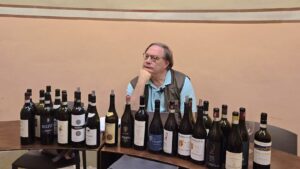
Whenever we open a First Growth, a legendary vintage, or simply a bottle carrying a celebrated name, we rarely approach it with a blank slate. We already know where it comes from, what critics have written about it, and how the market has valued it.Yet genuine tasting begins only after those preconceptions have been set aside. Ultimately, every great wine must answer a handful of fundamental questions. Does it still possess vitality? Does it continue to express terroir with clarity? And perhaps most importantly, has it stood the test of time? I was reminded of all these questions during a recent tasting session of some old noteworthy Bordeaux wines.
This tasting began with a fine Chamopagne, Krug Vintage 2008, before moving on to the subject of this story: three of Pessac-Léognan’s greatest dry white wines—Château La Mission Haut-Brion Blanc 2019, Domaine de Chevalier Blanc 2015, and Château Haut-Brion Blanc 2002. It concluded with five reds representing distinctly different interpretations of Bordeaux: Château Cheval Blanc 2012, Château Angélus 2009, Château Haut-Brion 2012, Château Latour 2014, and Château Mouton Rothschild 2014. This was never intended to be a parade of famous labels, but rather a comparative study of Bordeaux itself. Youth and maturity. Left Bank and Right Bank. Power and elegance. Density and precision. Around a single tasting table, these seemingly opposing qualities entered into conversation. The most revealing question was never which wine performed best. Rather, it was how each estate evolved over time while remaining unmistakably true to its own identity. As bottle age gradually moved youthful fruit, new oak and primary power into the background, something more fundamental emerged. Each estate’s understanding of terroir, grape varieties and structure became increasingly transparent. Time had not made these wines more alike. It had simply allowed each of them to become even more itself.

Three Bordeaux white wines and the expression of time
These three Bordeaux white wines explored something different: how time transforms a wine, with each representing different expressions of time. Served side by side, the first impression was not one of grape varieties, but of age. Although all three wines came from Pessac-Léognan, each occupied a distinctly different stage of evolution. The 2019 remained restrained and tightly coiled, the 2015 had reached an exceptional point of harmony, while the 2002 revealed the complex character that only extended bottle age can bring. Moving repeatedly between the three glasses made one thing increasingly clear. For great dry white Bordeaux, time does far more than alter aromas and flavours—it gradually reveals how each estate interprets terroir, structure and balance in its own distinctive way.
Among the three wines, the Château La Mission Haut-Brion Blanc 2019 Pessac-Léognan was immediately identifiable as the youngest at this stage of development. Its relatively pale colour and restrained expression conveyed the unmistakable tension of a wine still in the early stages of its life.The nose was remarkably pure, offering citrus, grapefruit, white peach and white flowers, supported by subtle notes of smoke, flint and carefully integrated oak. Compared with the other two wines, however, its aromatic profile remained noticeably reserved, revealing only hints of the complexity that almost certainly lies ahead. That youthful character continued seamlessly onto the palate. Bright acidity established a long, linear framework, while ripe fruit remained deliberately restrained. Rather than seeking richness or generosity, the wine emphasized precision, structure and definition. Repeated comparison with the other two glasses only reinforced this impression. Throughout the tasting, it remained the most introverted of the three. Perhaps for that very reason, it never established the immediate presence achieved by either the beautifully balanced 2015 or the mature, fully evolved 2002. Instead, it felt like a wine whose story has not yet been fully written. As a result, this particular bottle did not entirely meet my expectations on the day. That reservation, however, should not be interpreted as a question of quality. It is far more likely a reflection of timing. Judging from its acidity, concentration and structural integrity, La Mission Haut-Brion Blanc 2019 still appears to possess considerable potential, and deserves to be revisited after further bottle age. If La Mission represented youth, Domaine de Chevalier Blanc 2015 Pessac-Léognan seemed to have arrived at an exceptionally comfortable stage of its evolution and seemed to be the most complete expression of the three white wines in the tasting. Repeatedly returning to the glass, it never appeared to be the most aromatic wine of the flight. Instead, its greatest strength lay in the effortless sense of balance that united every component. The bouquet was layered and beautifully composed, combining ripe citrus, white peach, pear and acacia blossom with beeswax, subtle minerality and discreet oak, all seamlessly integrated. Complexity emerged naturally, without any individual element seeking attention. On the palate, medium-to-full body and vibrant acidity existed in near-perfect proportion. Ripe fruit retained both freshness and energy, while bottle age had begun to introduce additional depth without sacrificing precision. A persistent mineral thread carried the wine from beginning to end, giving the palate impressive definition and remarkable poise. After numerous comparisons, this ultimately became my favourite white wine of the tasting. Not because it possessed the richest aromatics or the greatest concentration, but because there was virtually nothing out of place. Ripeness, acidity, structure and flavour all existed in striking equilibrium. It had moved beyond the restraint of youth, yet showed none of the decline that can eventually accompany advanced maturity. Instead, it occupied what felt like an ideal point of completeness. The Château Haut-Brion Blanc 2002 Pessac-Léognan displayed the deepest colour. More than two decades of bottle age had transformed the wine into a rich golden hue, making it the clearest illustration of time’s influence throughout the flight. What proved most surprising, however, was how little oxidation it showed. The bouquet remained remarkably pure, combining honey, preserved citrus, beeswax, toasted hazelnut, smoke, cedar and pronounced minerality. Although unmistakable tertiary complexity had developed, the wine retained freshness and avoided the oxidative character that mature white Bordeaux can sometimes acquire. The greatest transformation had taken place on the palate. Compared with the younger wines, acidity had softened considerably. The youthful tension that once defined the wine had gradually given way to a broader, more rounded and unhurried rhythm. Consequently, repeated comparisons suggested that this wine was no longer climbing its evolutionary curve, but had entered the later stages of maturity. For some tasters, this may already represent the beginning of decline. For others, it is precisely where mature white Bordeaux becomes most compelling. Either way, the wine served as an important reminder that even the greatest dry white Bordeaux cannot remain at its peak indefinitely. Time brings complexity, but it also slowly softens the vitality that defines youth. The true beauty lies in witnessing that transformation unfold with honesty and grace.
Taken together, these three wines demonstrated one essential truth: bottle ageing is never a standardised journey. Time does not produce identical results. Instead, it magnifies what has always existed within the wine, allowing each estate’s interpretation of terroir, structure and balance to emerge with ever greater clarity.
Five Bordeaux Reds: How Time Preserves an Estate’s Identity
If the three white wines explored how time transforms a wine, the five reds examined something altogether different: how time preserves the identity of an estate. Cheval Blanc, Angélus, Haut-Brion, Latour and Mouton Rothschild represent three of Bordeaux’s most distinctive appellations—Saint-Émilion, Pessac-Léognan and Pauillac. They also span three contrasting vintages: 2009, 2012 and 2014, each shaped by very different growing conditions. The generous warmth of 2009 produced wines of remarkable richness and concentration. By contrast, 2012, though rarely regarded as a truly great vintage, often allows the personality of individual estates to emerge with unusual clarity. Meanwhile, 2014 is widely considered one of the finest Left Bank vintages of the last decade, celebrated for its precision, vibrant acidity and outstanding ageing potential. Yet after more than a decade in bottle, vintage itself was no longer the dominant impression. Repeatedly moving from one glass to another made their differences more apparent than tasting any one wine in isolation. Some estates expressed themselves through proportion, others through structure; some sought seamless harmony, while others relied on texture as their defining characteristic. Ultimately, what distinguished each wine was not the vintage, but each estate’s own interpretation of terroir, varietal composition, structure and balance. The most compelling question, therefore, was never which wine was “better.” It was how each of these great estates arrived at greatness by entirely different paths.
Of the five wines tasted blind, the Château Cheval Blanc 2012 Pessac-Léognan proved to be one of the easiest to recognise. Its unmistakable identity came not from power or concentration, but from Cabernet Franc. Composed of 54% Merlot and an unusually high 46% Cabernet Franc, the blend gives the wine an immediately recognisable aromatic profile of violet, red berries, mint, fresh herbs and graphite, while also shaping its long, finely etched structure. Although 2012 is not generally considered one of Bordeaux’s greatest vintages, that very fact allowed the estate’s own personality to emerge with exceptional clarity. Rather than pursuing richness or sheer volume, Cheval Blanc expressed itself through vibrant acidity, remarkably refined tannins and extraordinary proportionality. On the palate, every element seemed perfectly measured. The wine was linear, energetic and effortlessly poised, with nothing exaggerated and nothing missing. It was not the most powerful wine of the tasting. But it possessed the strongest sense of identity, making it perhaps the easiest wine of all to recognise blind. By contrast, the Château Angélus 2009 Saint-Emilion offered the greatest density. If Cheval Blanc defines itself through line and proportion, Angélus represents an entirely different interpretation of Saint-Émilion. The generosity of the 2009 vintage was expressed with remarkable completeness. Ripe black fruit, liquorice, dark chocolate and exotic spice combined to produce a broad, expansive palate whose remarkable concentration was most evident across the mid-palate, where the wine displayed the greatest density of the entire tasting. Yet density never came at the expense of balance. Fully resolved tannins and well-preserved acidity maintained freshness and composure, preventing the wine from ever becoming heavy.Two wines from the same appellation therefore arrived at profoundly different conclusions. Cheval Blanc pursued elegance through precision and proportion. Angélus achieved its identity through depth, volume and concentration. Among the five wines, the Château Haut-Brion 2012 Pessac-Léognan was perhaps the least immediately dramatic, but exhibited the most natural harmony. It lacked the unmistakable Cabernet Franc signature of Cheval Blanc, the sheer breadth of Angélus, the architectural structure of Latour and the seductive texture of Mouton Rothschild. Yet with every return to the glass, its strengths became increasingly apparent. Blackcurrant, cedar, tobacco, graphite and the unmistakable smoky character of Pessac-Léognan merged into a remarkably seamless whole. On the palate, fruit, acidity, tannin, minerality and oak existed in almost perfect proportion. Every element was clearly present, yet none sought to dominate. What ultimately impressed most was not any individual aroma or structural component, but the extraordinary sense of integration. It was a wine defined less by individual parts than by the effortless harmony with which those parts coexisted.

If Haut-Brion finds greatness through harmony, Latour builds it through structure. Repeated comparisons consistently revealed the most clearly defined framework of the tasting. With the Château Latour 2014 Pauillac, Cabernet Sauvignon established a powerful yet finely proportioned architecture, while dense tannins and vibrant acidity created remarkable depth, tension and persistence. This was by no means the most expressive wine on the table. Many of its finer details remained concealed beneath its formidable structure, suggesting that much of the wine still lies ahead. Even today, Latour 2014 continues to hold a significant portion of its potential in reserve. It remains, unmistakably, a wine built for the future. Alongside Latour, the Château Mouton Rothschild 2014 Pauillac offered a strikingly different interpretation of Pauillac. Where Latour commands admiration through structure, Mouton captivates through texture. What makes the comparison particularly fascinating is that both wines are overwhelmingly Cabernet Sauvignon. Latour 2014 contains 90.2% Cabernet Sauvignon, while Mouton Rothschild 2014 is composed of 81%. Yet their personalities could hardly be more different. Latour emphasises the architectural qualities of Cabernet Sauvignon—its framework, depth and extraordinary capacity for ageing. Mouton, by contrast, transforms the same grape into something altogether more tactile. Exceptionally ripe tannins, gentle extraction and the estate’s long-standing pursuit of refinement produce a palate of almost velvety texture. Rather than asserting itself through structure, Mouton draws the taster in through its remarkable finesse. Every component flows seamlessly into the next, creating a wine whose greatest strength lies not in power, but in the effortless elegance of its texture.

In conclusion, the greatest lesson of this tasting was not a renewed understanding of Bordeaux, but a deeper understanding of bottle age. Time does not erase the differences between great estates. On the contrary, as youthful fruit, new oak and primary power gradually recede, what remains is each estate’s own philosophy of terroir, structure and balance. Cheval Blanc, Angélus, Haut-Brion, Latour and Mouton Rothschild have not become more alike with age. Each has simply become a more complete expression of itself. Perhaps that is Bordeaux’s greatest achievement. It has never spoken with a single voice, nor has it ever offered only one definition of greatness.

The wines in this tasting