
Brunello Di Montalcino 2021: Terroir, Vintage And Style

by Yumi Liu

Brunello di Montalcino is perhaps one of Italy’s most misunderstood great wines.

For those encountering it for the first time, it is often reduced to a handful of familiar descriptors: 100% Sangiovese, Tuscany, long ageing potential, and one of Italy’s most prestigious DOCG appellations. Yet once one begins tasting Brunello consistently across different producers and vintages, it quickly becomes clear that these labels alone cannot explain why Brunello and Montalcino regarded as one of the world’s greatest terroir-driven wines and wine regions.
Traditionally, Montalcino has often been described in broad geographical terms—north versus south, east versus west. More recently, many consumers have come to understand the region through critics’ scores or the reputations of its most celebrated estates. While these approaches offer useful starting points, they do little to reveal the true nature of the Brunello you might be drinking. The style of a Brunello is determined not simply by the location of its vineyard on a map, nor solely by the quality of the vintage, but by the interaction of terroir, climate, vineyard management, ripening dynamics and the winemaker’s philosophy.

The 2021 vintage deserves close attention not only because it is widely regarded as one of the finest in recent years, but also because it provides an exceptional opportunity to examine the relationship between terroir and vintage. When growing conditions are unusually well-balanced, how does each vineyard express its own distinctive identity? And how do different producers, working within the same vintage, arrive at remarkably different stylistic interpretations? These are precisely the questions this article seeks to explore. In this article, I do not wish to identify the “best” Brunello, nor am I attempting to rank producers according to quality. Instead, the ojective of the article is to establish a framework for understanding Brunello through three fundamental dimensions—terroir, vintage and structure—and then use the wines tasted in this study as case studies to examine how different estates interpret Brunello within the same vintage. For me, the most meaningful comparison has never been about who receives the highest score, but rather about which producer most faithfully expresses its own vineyard and the terroir from which it originates.

Understanding Montalcino: More Complex Than a Map

Perhaps the most frequently repeated statement about Brunello di Montalcino is that “the north is elegant, while the south is richer and more powerful.” This generalization is not without foundation. Differences in elevation, temperature and ripening patterns do create broad stylistic tendencies across different parts of the appellation. However, treating this rule of thumb as the basis for understanding any individual Brunello is an oversimplification. Unlike many of Europe’s great wine regions, Brunello di Montalcino has no officially defined subzones. Although critics, producers and the trade commonly refer to vineyards as being located in the north, south, east or west, these geographical descriptions are primarily a convenient way of communicating location rather than a meaningful classification of style. Even two vineyards separated by only a few hundred metres may produce wines of remarkably different character because of differences in elevation, aspect, soil composition and local microclimate.

Montalcino itself is an exceptionally complex hillside landscape. Vineyards are planted between approximately 120 and 650 metres above sea level, where variations in altitude and exposure create significant differences in sunlight, temperature and ripening. Alberese, Galestro, clay and sandy sedimentary soils occur in an intricate mosaic throughout the appellation. Extensive forest cover, the circulation of air through the surrounding valleys, and subtle topographical variations further generate a remarkable diversity of microclimates. Together, these factors influence the rate of ripening, phenolic development, acid retention and ultimately the style of the finished wine. The terms of mesoclimate and microclimate should therefore not be understood simply as local weather conditions. Rather, they refer to the unique growing environment created by the interaction of elevation, slope orientation, topography, forest cover, air circulation and soil characteristics within an individual more or less large area and single vineyard.

Higher-altitude vineyards, for example, generally experience a longer growing season and greater diurnal temperature variation, allowing grapes to ripen more slowly while retaining freshness. Vineyard aspect determines both the intensity and duration of solar exposure throughout the day. Meanwhile, maritime influences from the Tyrrhenian Sea, together with the air currents that move through the Orcia and Ombrone valleys, continuously regulate temperature and humidity across different parts of the appellation. Equally significant is the fact that more than half of Montalcino remains covered by forest, a feature that distinguishes it from many of Tuscany’s, and Italy’s, other renowned wine regions. These forests help moderate summer temperatures, retain atmospheric moisture, reduce wind intensity and contribute to local diurnal temperature variation. As a result, they play a fundamental role in shaping vineyard microclimates. This is why even neighbouring vineyards can exhibit markedly different ripening patterns and stylistic potential.

Ultimately, what defines the personality of a Brunello is not its position on a map, but the continuous interaction between terroir, vintage, viticulture and winemaking. The vineyard remains the foundation upon which a wine’s identity is built, while the role of the winemaker is primarily to interpret and amplify that identity rather than to create it. When a wine faithfully reflects the character of its vineyard instead of merely showcasing technical winemaking skill, it expresses what is arguably Brunello’s greatest strength: its capacity to communicate terroir. It is precisely for this reason that Brunello di Montalcino remains one of Italy’s most compelling regions for serious study. There is no single style that can represent the entire appellation, nor can any single factor explain the diversity found among its producers. To understand Montalcino is therefore not simply to learn a geographical map, but to develop a broader understanding of how terroir shapes the style and identity of wine. For the same reason, every vintage must be interpreted within the context of terroir. A vintage may alter the pace and pattern of ripening, but it does not change the terroir itself. What is truly worth examining is how different terroirs respond to the opportunities and challenges presented by the same growing season.

2021: A Vintage Defined by Balance and Complete Ripeness

The quality of a vintage cannot be judged simply by whether the weather was “perfect.” For Brunello di Montalcino, a truly great vintage is not one without frost or drought, nor is it one characterized merely by high sugar levels or elevated alcohol. Rather, it is a growing season in which grapes have sufficient time to achieve sugar accumulation, acid retention and phenolic ripeness simultaneously, allowing these essential components to reach harmony rather than individual extremes. For Brunello, where Sangiovese is the sole permitted grape variety, this balance of ripeness is far more significant than any single measure of maturity.

The 2021 vintage represents precisely such a year.

The growing season was by no means without challenges. Severe spring frosts in early April caused significant losses in some vineyards, with lower-lying sites suffering particularly substantial reductions in yield. Yet the impact was far from uniform across the appellation. Differences in elevation, aspect, cold-air drainage and each vineyard’s unique microclimate resulted in dramatically different outcomes. Some vineyards escaped almost entirely unscathed, while others experienced severe crop loss. Once again, this demonstrated that every vintage in Montalcino must be understood through the lens of individual terroirs rather than generalized across the appellation. As summer progressed, conditions became increasingly dry, although prolonged episodes of extreme heat never dominated the season. Consistently warm days encouraged slow, steady ripening, while cool nights reduced respiratory losses, preserving acidity and allowing grape skins and seeds additional time to achieve complete phenolic ripeness. For Sangiovese, this gradual pace of development is considerably more important than sugar accumulation alone, because tannin maturity, acid retention and fruit concentration collectively determine the wine’s structural balance and ageing potential—not simply its eventual alcohol level.

September proved to be the defining stage of the vintage. Warm, stable daytime temperatures combined with pronounced diurnal variation enabled the grapes to complete aromatic and phenolic development while maintaining vibrant acidity. Ripeness in 2021 was therefore not expressed through elevated alcohol, but through the harmonious relationship between sugar, acidity and phenolic maturity. For Sangiovese, this equilibrium is ultimately far more meaningful than ripeness considered in isolation.

What I find most compelling about 2021 is not simply whether it deserves to be called a great vintage, but the more interesting question it raises: when a growing season provides relatively balanced ripening conditions, how does terroir shape the final character of the wine?

There is no single answer. Based on my ongoing tastings of 2021 Brunellos, identical vintage conditions, the same grape variety, and broadly comparable levels of ripeness have by no means produced stylistic uniformity. Clearly, Brunellos made in one quadrant do resemble each other more than those of other quadrants. It would be illogical if it were otherwise. But within that broad context of quadrant, and of subzones within those quadrants, each outstanding Brunello represents its own interpretation of terroir within the same vintage. Some emphasize precision, tension and linearity; others pursue depth, texture and layered complexity. Some are defined by floral lift and elegance, while others express greater depth, restraint and structural gravitas. Sharing the same vintage has not diminished their individuality. Instead, each wine continues to articulate its own unmistakable identity.

For this reason, I regard 2021 less as a vintage to be ranked than as one to be studied. The most meaningful question is not which wine received the highest score, but why, under the same vintage conditions, different terroirs, viticultural decisions and winemaking philosophies continue to produce Brunellos of such remarkable individuality. That, to me, is precisely what makes the 2021 vintage one of the most rewarding to taste—and to study.

Evaluating a Vintage: Structure Matters More Than Flavour

For a young Brunello, aromas will inevitably evolve over time, whereas its structure largely determines the trajectory of its future development from the moment it is bottled. As the wine ages, primary fruit gradually gives way to dried flowers, spices, forest floor and other tertiary aromas. The relationship between acidity, tannin, alcohol and body, however, determines whether the wine possesses the structural integrity to sustain that evolution. Consequently, when assessing a vintage, I prefer to examine its structure before describing its aromas.

In Brunello, structure is not defined by the dominance of any single element, but by the harmony among them. Acidity provides vitality and length, tannins establish the framework, alcohol contributes weight, while fruit integrates the palate into a coherent whole, creating the wine’s overall architecture. When these elements remain in balance, a wine may appear relatively restrained in youth, yet continue to unfold layer after layer over many years. This explains why many Brunellos with exceptional ageing potential often reveal their structure long before they reveal the full complexity of their flavours. Having tasted an always increasing number of 2021 Brunellos, I find myself paying progressively less attention to whether a young wine already displays aromatic complexity, and far more attention to the quality of its structure. Rather than asking whether tannins are abundant, I ask whether they are fully ripe. Rather than focusing on concentration, I look for proportion. Rather than expecting immediate openness, I consider whether the wine still possesses room for future development. These structural attributes often provide a far more reliable indication of long-term potential than any specific aromatic descriptor.

This has also led me to reconsider what we mean by “power” in Brunello. Traditionally, power has often been associated with body, tannic intensity or elevated alcohol. Yet after tasting Brunellos across a broad range of styles, I have come to believe that a wine’s true power rarely resides in any single structural component. Instead, it emerges from the balance and integration of the entire architecture. When acidity, tannins, body and flavour all reinforce one another without any element dominating the whole, the wine acquires an internal tension that allows it to develop gracefully over time. Its strength comes not from weight, but from structural harmony. Ultimately, this is why my evaluation of any vintage always returns to structure. Aromas will evolve and flavours will change, but balance, proportion and the capacity for long-term development are often already evident in youth. These are the qualities that form the foundation of my comparisons between producers and vineyards.

Building a Framework for Tasting Brunello

The differences between Brunello producers extend far beyond aromatic profile or body. They are expressed through structural architecture, the rhythm of ripening and, above all, vineyard expression. These distinctions do not disappear within the same vintage; indeed, in years of balanced growing conditions they often become even more apparent. Among young Brunellos, some reveal generous, expressive fruit from the very first sip, while others appear restrained, reserved or even slightly closed. Neither style should be regarded as inherently superior. Nor should a more reserved wine automatically be assumed to require longer ageing before revealing its quality. In a region celebrated for longevity, a wine’s youthful character represents only one stage in its life rather than its final identity.

Before comparing producers, I therefore prefer to establish a consistent framework for evaluating Brunello. For me, quality is not determined solely by aromatic complexity or concentration, but by several interconnected factors: the coherence of the wine’s overall architecture, the supporting role of its acidity, the maturity of its tannins, the balance of its proportions, the consistency between flavour and structure, and finally, its ability to express both its vineyard and the typicity of Brunello itself. These criteria remain relevant regardless of vintage. Together, they form the framework through which I seek to understand and evaluate Brunello. The most interesting comparisons between producers arise from observing how, within these shared standards, different terroirs, viticultural practices and winemaking philosophies create distinctive and consistent stylistic identities over time.

The following tasting notes use the wines from this tasting as case studies, examining their terroirs, structural characteristics and stylistic expressions in an effort to answer the central question of this article: when a vintage provides broadly similar ripening conditions, what allows these Brunellos to express such remarkably individual personalities?

The Wines in this Tasting

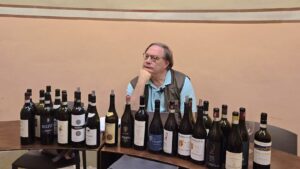
The following Brunellos will be assessed primarily through five interconnected dimensions: Structure — the coherence and integrity of the wine’s overall architecture; Balance & Proportion — the relationship between acidity, alcohol, tannins and fruit; Tannin Quality — ripeness, texture and structural support; Vineyard Expression — the authenticity with which the wine reflects its vineyard and terroir; Ageability — the wine’s structural capacity for long-term development. All the wines in this report were tasted in Shanghai in July 2026.

Membership Required

You must be a member to access this content.

View Membership Levels

Already a member? Log in here

Share the Post:
Yumi Liu

Yumi Liu has been collecting and drinking wine for more than a decade and has earned a slew of wine certificates in the interim: level 3 WSET and now planning diploma studies; Educator level in Spanish wines (Wines of Spain certified), top level New Zeland wines (Wines of New Zeland certified) and obtained the highest score in her class for German wines (Wines of Germany certified). She has passed all of Ian D’Agata’s Italian wine courses and is generally regarded as being one of the most knowledgeable people on Italian wine in all of China. Over the years, she has also served as the Wine Educator at EMW wines, one of China’s five largest and most important fine wine importers and has led masterclasses on wines at prestigious wine shows including the Wine to Asia fair in Shenzhen and Vinitaly in Verona.

Related Posts

icon

ABOUT THE IAN D’AGATA WINE ACADEMY AND ITS COURSES

Ian’s background in wine teaching and course creation Ian D’Agata has led different wine schools over the years, and has been increasingly asked over the years to set up new ones for different outfits. In the early 2000s, he taught wine courses at the Gambero Rosso’s Citta’ del Gusto, and...

No comments yet.


Show winery reviews

  • Baricci
  • Cerbaiona
  • Costanti
  • Il Marroneto
  • Le Chiuse
  • Le Potazzine
  • Poggio di Sotto
  • Salvioni Cerbaiola
  • Soldera
