Consorzio Ristorante
Via Monte di Pietà 23
10122 Turin
Piedmont, Italy
Tel. +39 011 2767661

The dishes
Le Acciughe
Fried anchovies coated in flour, breadcrumbs and herbs, served with toasted bread, butter and Cantabrian anchovies from the Mar Cantabrico (Alici fritte, in farina, pan grattato ed erbe, crostino di pane, burro e acciughe del Mar Cantabrico)
Fried wild herb fritters, artisanal corn tacos and mint mayonnaise (Friciule, tacos di mais, maionese alla menta (Polpettine fritte di erbe selvatiche, tacos artigianale di mais e maionese alla menta)
Agnolotto Gobbo
Handmade agnolotto filled with beef, pork and rabbit, served with butter and 30-month-aged Vacche Bianche Parmigiano Reggiano (Pasta ripiena di carne di manzo, maiale e coniglio servita al burro e Parmigiano Reggiano Vacche Bianche 30 mesi)
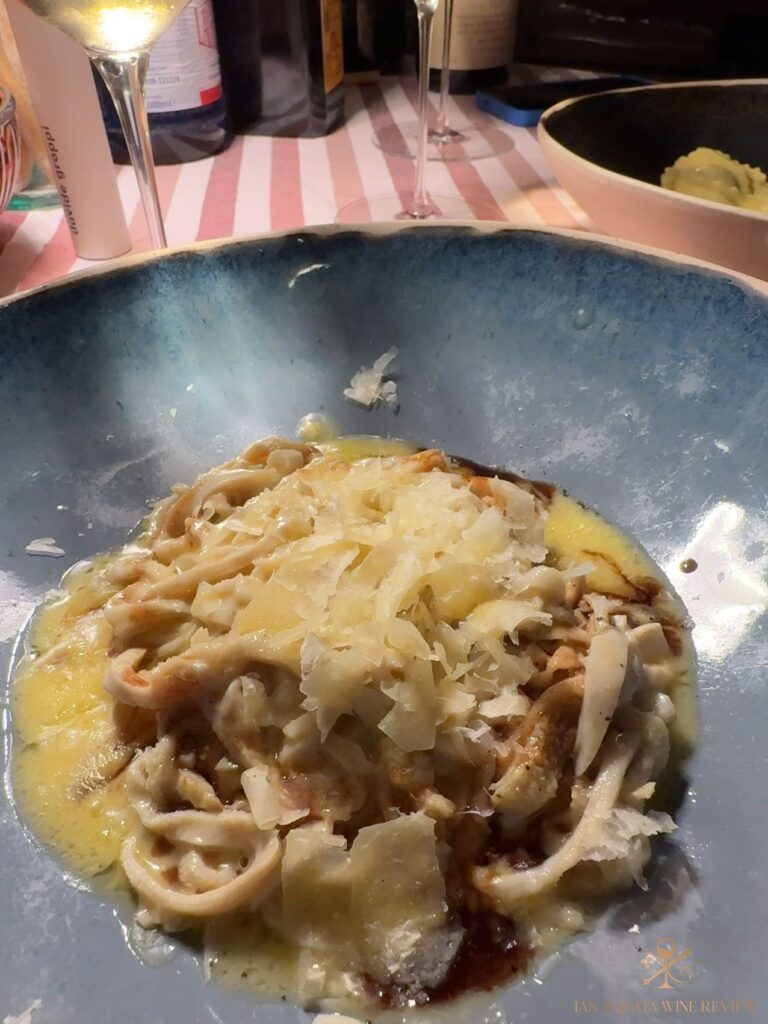
Tajarin di trippa d’agnello
Finely sliced lamb tripe with butter, roast meat jus and Gallina cheese from the Val Susa (Trippa d’agnello tagliata finemente, mantecata al burro e sugo d’arrosto, formaggio Gallina della Val Susa)
Ravioli di Finanziera
Ravioli filled with finanziera, served with roast meat jus and capers (Ravioli ripieni di finanziera, sugo d’arrosto e capperi)

Located in Turin’s historic city centre, Consorzio is neither a fine-dining destination built around luxury nor a nostalgic trattoria catering primarily to tourists. Most of its clientele are locals rather than international visitors, a fact that often says more about a restaurant’s true quality than any guidebook ever could.
The interior is understated and unpretentious. Wooden tables and chairs, simple décor, and a relaxed atmosphere quickly make it clear that the focus here is not on appearances, but on what is served on the plate and poured into the glass. What distinguishes Consorzio from many traditional Piedmontese restaurants is its commitment to preserving culinary traditions that are gradually disappearing. Dishes based on offal, once central to the region’s everyday cuisine, remain an important part of the menu. Sweetbreads (animelle), bone marrow (midollo), tongue (lingua), tripe (trippa), and other ingredients commonly referred to as quinto quarto are not presented as museum pieces or historical curiosities. Instead, they continue to live on as part of a vibrant and evolving local food culture.

Equally impressive is the restaurant’s wine list. Alongside a small selection of older vintages, it reveals a distinctly contemporary outlook, featuring numerous small producers and natural wine estates committed to low-intervention winemaking. The reasoning behind these choices is impossible to know with certainty. Perhaps it reflects the restaurant’s focus on offal-based cuisine, as wines shaped by wild yeasts and a touch of rustic character often seem particularly well suited to these traditional dishes, creating a natural dialogue between food and wine.
Our first starter, fried anchovies coated in flour, breadcrumbs and herbs, served with toasted bread, butter and Cantabrian anchovies from the Cantabrian Sea appeared deceptively simple, yet it proved to be one of the most memorable opening dishes of the evening. The fried anchovies were light and crisp, cooked with remarkable precision. There was no trace of greasiness, while the natural flavour and texture of the fish remained fully intact. In a traditional dish such as this, it is precisely this attention to detail that reveals the skill of the kitchen. The second protagonist on the plate was the Cantabrian anchovy itself, a denizen from northern Spain’s Mar Cantabrico (Cantabrian Sea). Long regarded as among the finest anchovies in Europe, those from this region are prized for their fleshy texture, delicate richness and intense savoury depth. The accompanying butter and toasted bread balanced their salinity beautifully, creating a more rounded and harmonious expression. On the surface, this may seem like a simple anchovy starter, yet it also reflects centuries of culinary exchange between Piedmont and the Ligurian coast. Although Turin lies far from the sea, anchovies have long played an important role in Piedmontese cuisine. From the classic Bagna Cauda to numerous regional dishes, traces of this historical connection can still be found throughout the local gastronomic tradition.
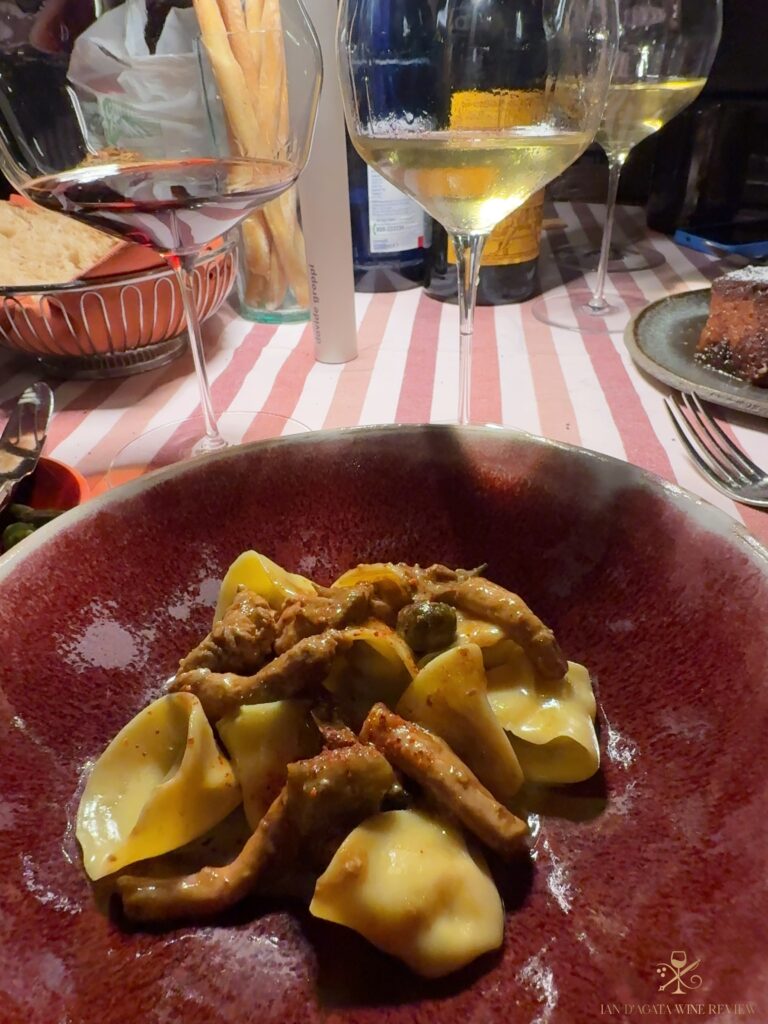
In contrast to the distinctly traditional character of the anchovy dish, the fried wild herb fritters, artisanal corn tacos and mint mayonnaise starter revealed a more contemporary side of Consorzio. The fritters were crisp on the outside and soft within, with an intense wild herb character running throughout. Beyond the expected herbal notes, there was also a subtle spice profile reminiscent of Middle Eastern and even Indian cuisine. The mint mayonnaise further amplified these botanical elements while adding a refreshing and slightly exotic dimension to the dish. It is worth noting that dishes with such pronounced herbal and spice-driven flavours are often challenging when it comes to wine pairing. Whether paired with traditional Piedmontese reds or most white wines, achieving genuine harmony can be difficult due to the dish’s distinctive aromatic profile. As a result, it felt somewhat independent from the more overtly regional dishes that followed, while simultaneously showcasing Consorzio’s thoughtful use of wild herbs and seasonal ingredients. The Agnolotto Gobbo represents an older and more rustic form of Piedmont’s traditional stuffed pasta. Compared with the more familiar and delicate Agnolotti del Plin found today, Gobbo is larger in size and more generously filled. Consorzio’s version combines beef, pork and rabbit, dressed simply with butter and 30-month-aged Parmigiano Reggiano, resulting in a dish that feels deeply rooted in the rural traditions of Piedmont. The hefty filling delivers both savoury depth and satisfaction, while the rabbit contributes an additional layer of refinement. The pasta itself is well judged, retaining both elasticity and texture. Butter and aged cheese provide gentle dairy richness and subtle nutty notes without overshadowing the flavour of the meat. There are no elaborate sauces and no attempt at modern reinterpretation; instead, the filling, butter and cheese remain firmly at the centre of attention. It is a simple yet deeply satisfying dish, and one that helps explain why agnolotto remains one of the most iconic staples of the Piedmontese family table. Compared with the classic Agnolotto Gobbo that preceded it, this Tajarin di trippa d’agnello perhaps better illustrates Consorzio’s commitment to preserving the traditions of Quinto Quarto cuisine. The lamb tripe was impeccably cleaned, free from any unpleasant animal or offal aromas, demonstrating the kitchen’s considerable skill in handling such ingredients. Yet the dish’s principal weakness stemmed precisely from the tripe itself. It had been cut so finely that it closely resembled the tajarin in both width and appearance, diminishing its identity within the dish. In theory, the distinctive texture and chewiness of tripe should have been its defining feature. In practice, however, pasta and tripe often merged into a single texture, making it difficult at times to distinguish one from the other. What should have been the protagonist ultimately became little more than a component of the sauce. Butter, cheese and roast meat jus combined to create a comforting and harmonious flavour profile, but the seasoning felt somewhat restrained. Without sufficient textural support from the tripe and with slightly understated salinity, the dish began with elegance and subtlety but gradually lost momentum. As the dairy richness accumulated on the palate, a degree of heaviness emerged. This remains a thoughtful and admirable dish, reflecting genuine respect for traditional offal cookery. Yet compared with the highly successful Agnolotto Gobbo, it lacked some of the personality and character that the lamb tripe itself should have provided. If there is one dish that best embodies Consorzio’s commitment to preserving Piedmont’s culinary heritage, it is perhaps this Ravioli di Finanziera. Finanziera is one of Piedmont’s most emblematic Quinto Quarto dishes, traditionally prepared using ingredients such as cockscombs, gizzards, kidneys, sweetbreads and various other offal cuts. Consorzio transforms this historic preparation into ravioli form, preserving its essential character while making it more approachable for contemporary diners. Having never tasted finanziera before, I approached the dish with a degree of caution. Given both its reputation and the ingredients involved, I expected something considerably more challenging than what ultimately arrived at the table.
The thin yet resilient pasta encloses a concentrated finanziera filling, while the cockscombs, mushrooms and rich meat jus on the plate complete the dish’s flavour architecture. Long cooking transforms the cockscombs into a tender, gelatinous component, while the mushrooms contribute additional layers of umami that complement the savoury depth of the filling.
What became increasingly apparent over the course of the meal was how naturally this dish seemed to belong alongside Barolo. The richness, gelatinous texture and savoury depth of finanziera find a natural partner in mature Nebbiolo. As Barolo ages, its tannins soften and evolve towards aromas of dried flowers, forest floor, leather, truffle and spice. These mature characteristics mirror and enhance the traditional flavours of finanziera in a way that younger, more powerful Barolos often cannot. A bottle with some age behind it is capable of revealing the dish’s subtler and more profound dimensions.

To Consorzio’s credit, the restaurant has resisted the temptation to dilute or modernise these traditions beyond recognition. Instead, it presents them in a refined and accessible manner while preserving their essential identity. For a first encounter with finanziera, I could hardly have imagined a more convincing introduction. For anyone wishing to understand Piedmontese food culture, this dish is more than a plate of pasta; it is an expression of regional history, memory and culinary continuity.
Wine List: Hunting for Unexpected Treasures
If the menu at Consorzio reflects the vitality of Piedmont’s culinary traditions, the wine list reveals a restaurant with a far broader and more open-minded view of the wine world.
Alongside the expected Barolos and Barbarescos are a number of surprising discoveries. From low-intervention producers to mature bottles rarely encountered on restaurant lists, it is the sort of selection that encourages lingering over every page. For wine lovers, such a list is often far more compelling than one built solely around famous estates and celebrated vintages, because you never quite know what you might find next.

The bottle that immediately caught my attention was a 1995 Clos de la Coulée de Serrant. For anyone who appreciates Chenin Blanc, it is an irresistible name. Simply encountering a thirty-year-old bottle of this legendary wine on a restaurant list felt like discovering hidden treasure.
Upon opening, however, the wine displayed pronounced oxidative characteristics. Half-jokingly, I referred to it as “a bottle of Madeira,” as the bouquet was dominated by notes of caramel, toffee, hazelnut and the nutty aromas often associated with oxidative white wines. While these flavours were not unpleasant, they had become rather dominant for a wine renowned for its tension, minerality and remarkable ageing potential. The restaurant subsequently transferred the wine to a decanter for further observation. When revisited two hours later, its condition had improved noticeably. The aromatics became more expressive, and the wine regained a measure of balance and complexity. Even so, it seemed closer to a great wine in its twilight years than a legendary bottle at its peak.
Nevertheless, I do not regret ordering it. Old wines are always a mystery. Before the cork is pulled, no one can know exactly what awaits inside the bottle. They may deliver extraordinary surprises or unavoidable disappointments; they may reveal the most captivating complexities that only time can create, or offer a glimpse of a great wine gradually entering old age. It is precisely this uncertainty that gives mature wines a fascination no young wine can replicate. And finding a bottle such as a Nicolas Joly 1995 Clos de la Coulée de Serrant on Consorzio’s wine list remains exciting in itself.
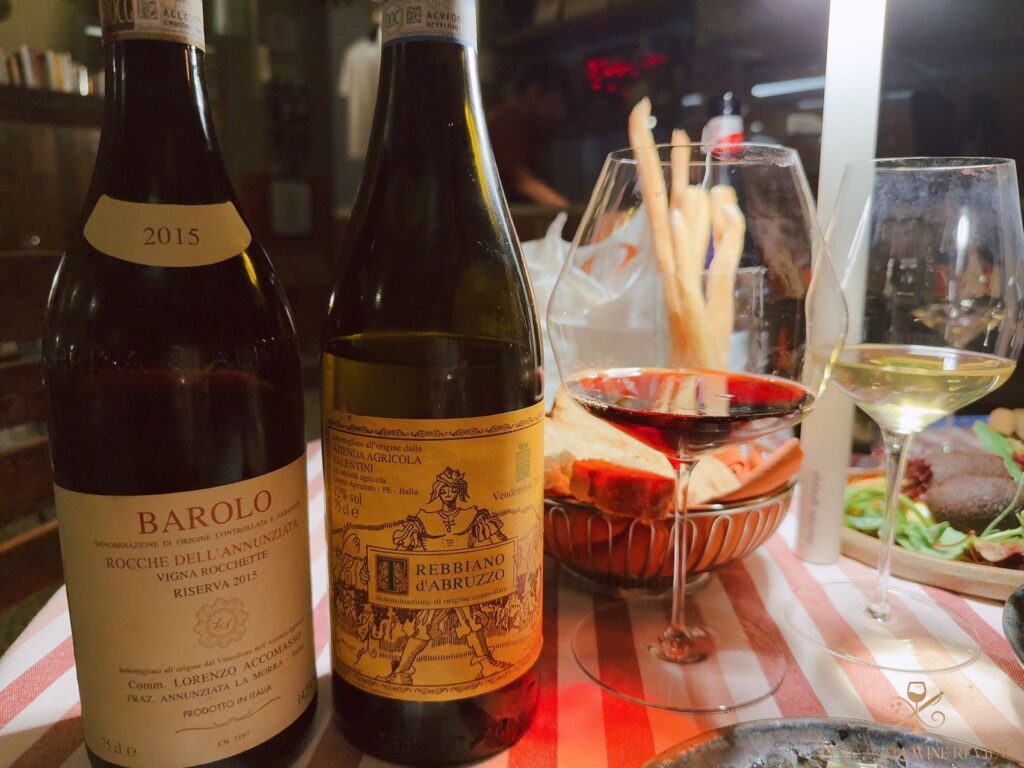
In contrast, the 2021 Valentini Trebbiano d’Abruzzo showed an entirely different character. Young, vibrant and full of energy, its bright acidity provided an essential counterbalance throughout the meal. Whether paired with anchovies, butter, cheese or the succession of offal-based dishes that followed, its freshness brought lift and clarity to the table. It also served as a reminder that truly great white wines do not need decades of ageing to demonstrate their greatness.
The wine that ultimately resonated most deeply with the meal, however, was Lorenzo Accomasso’s Barolo Riserva Rocche dell’Annunziata Vigneto Rocchette. Unlike younger Barolos that often emphasise power and structure, this bottle had entered a more complex and nuanced stage of development. As the evening progressed, it formed an almost effortless connection with dishes such as the Agnolotto Gobbo, Ravioli di Finanziera and the various Quinto Quarto preparations. Wine and food were no longer competing for attention; instead, they seemed to be telling the same story of Piedmontese terroir and culinary tradition. Perhaps this is what makes Consorzio so appealing. Its wine list does not chase trends, nor does it seek to impress through sheer prestige. Instead, it maintains a delicate balance between the classic and the contemporary. From a thought-provoking bottle of 1995 Clos de la Coulée de Serrant, to a youthful Valentini, to a mature, old-school Barolo, each wine felt like an individual exploration. For those who truly love wine, that is far more engaging than a list built solely on famous labels and trophy vintages.