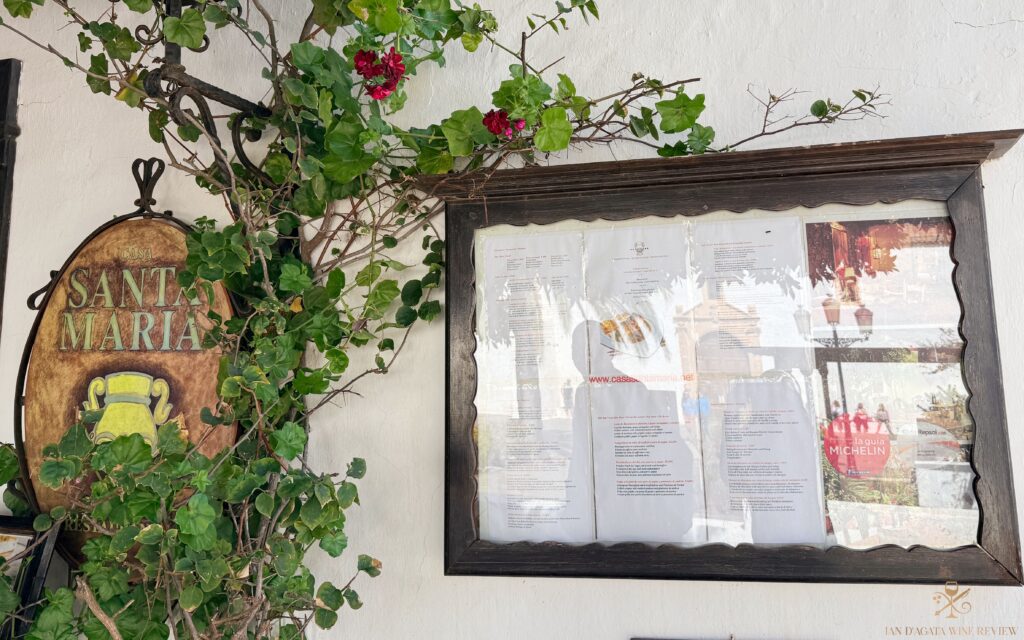
Casa Santa Maria
Calle León y Castillo 9
35640 La Oliva, Fuerteventura
Canary Islands, Spain
Tel: +34 928 861 196
Email: info@casa-santamaria.com
The Dishes
Santa Maria Insalata
Langostinos con Guacamole y Tomate Seco
Cabrito al Horno (Roasted Young Goat)
Carrillada Ibérica (Iberian Pork Cheek)
Tarta de Queso con Helado de Vainilla (Cheese tart with Vanilla Ice Cream)
In the northern town of La Oliva on the island of Fuerteventura, Casa Santa Maria does not look like a restaurant designed with tourists in mind. It feels more like a house that has simply continued to be used through time: whitewashed walls, heavy wooden beams, a courtyard structure, and furniture that carries a quiet sense of age. Unlike many restaurants that deliberately stage a sense of local character, the atmosphere here does not feel constructed. It is simply the trace of the building’s own history.
The house itself was originally a nineteenth-century agricultural estate. At the time, La Oliva served as the administrative center of Fuerteventura, and the island’s economy relied largely on goat herding, small-scale grain farming, and modest trade. Houses like this functioned both as family homes and as working agricultural spaces. Later, as agriculture declined and much of the population moved away, many of these buildings lost their original purpose. It was only in the second half of the twentieth century, when the Canary Islands began attracting residents, artists, and travelers from mainland Europe, that these old structures slowly found new lives as restaurants, galleries, or cultural venues.
Casa Santa Maria followed a similar path. It became not only a restaurant, but also something of a cultural space. Inside, paintings are frequently displayed and small exhibitions are occasionally held. The framed works and posters on the walls are not simply decorative objects; they feel like part of an ongoing cultural presence within the building. While dining, it is difficult not to notice them, and the room often feels closer to a small gallery than to a conventional restaurant. The menu itself is structured with similar clarity: starters, mains, desserts. There is no attempt at conceptual cuisine, nor lengthy explanations. Salads, seafood, meat dishes, and then dessert. The rhythm feels closer to a traditional European table that has simply continued to follow its familiar order.
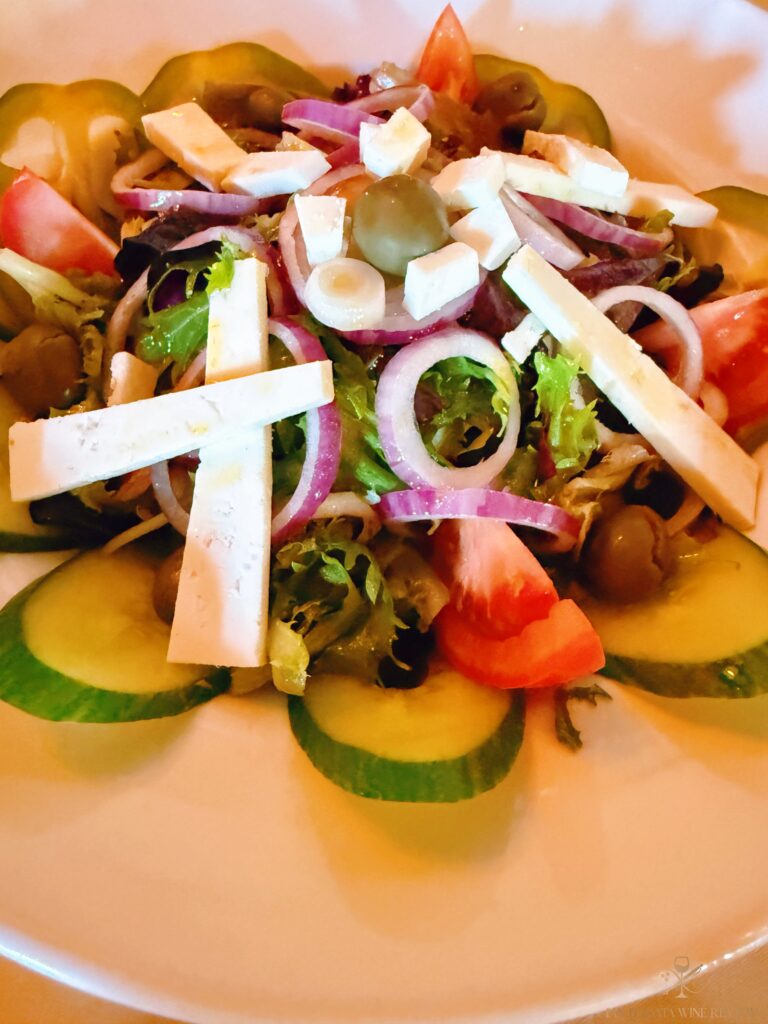
The first dish we tried was the Santa Maria Insalata. At first glance it appears very simple: cucumber, tomato, lettuce, red onion, olives, and thin strips of white cheese. Slices of cucumber form a loose circle along the edge of the plate, while the vegetables and cheese sit casually in the center, without any elaborate plating. Yet the flavors are more layered than the presentation suggests. The first impression is one of freshness: lettuce and cucumber provide a clear sense of moisture, while the red onion adds a faint sharpness. As the olive oil and cheese begin to unfold on the palate, the finish reveals a gentle sweetness. This sweetness does not come from sugar, but rather from the natural fructose of ripe tomatoes, the fruitiness of olive oil, and the creamy dairy notes of the cheese. The cheese mentioned on the menu — Betancuria cheese — is not merely a garnish. More precisely, it belongs to one of Fuerteventura’s most representative cheese traditions: Queso Majorero. Made from the milk of the island’s native Majorera goats, it is one of the Canary Islands’ most important local products. Young Majorero cheese is typically firm yet mild, with clear milky aromas and subtle nutty notes, while maintaining a balanced acidity. Compared with many stronger goat cheeses, its flavor is gentler and more balanced, making it particularly well suited for salads. In this insalata, it does not overpower the freshness of the vegetables. Instead, between the cucumber, tomato, and olives, it adds a steady layer of creamy dairy richness that softens the finish of the dish.
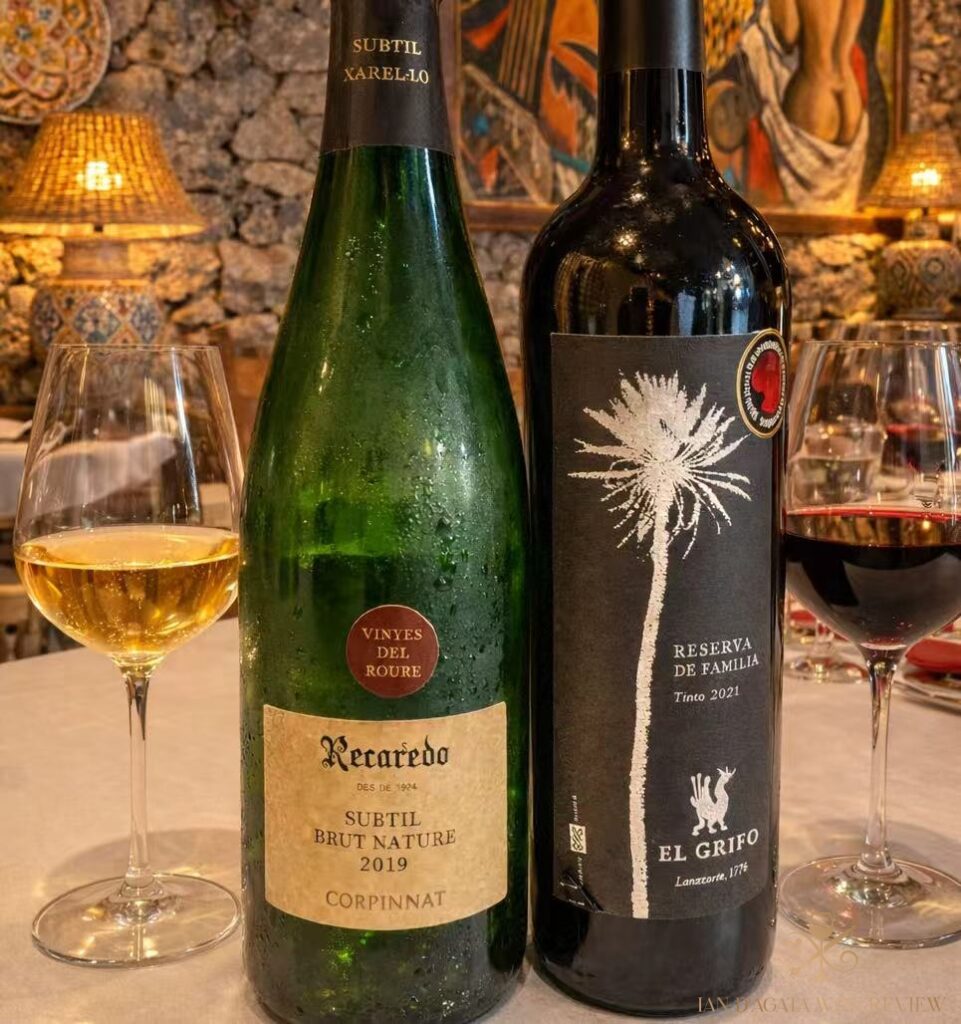
Within the meal’s rhythm I described at the outset, the first bottle of wine naturally becomes the beginning of the meal in and of itself, as it reaches, appropriately, our table before the salad. The 2019 Recaredo Subtil Corpinnat Brut Nature, made from 100% Xarel·lo and aged extensively on the lees, is not merely a simple aperitif tipple despite being served at the start of the dinner. In the glass, the bubbles are fine and restrained. The aromas suggest green apple, citrus peel, and a faint hint of almond, with a subtle note of toasted bread emerging beneath. It proves particularly well suited to accompany the first dishes. In front of the Santa Maria Insalata, its bright acidity and mineral edge make the salad feel even fresher, gently cutting through the richness of the olive oil. It’s a wine that feels especially appropriate in this spot. The high acidity and mineral character of Xarel·lo sharpen the freshness of the salad, while the fine bubbles quietly cut through the olive oil.
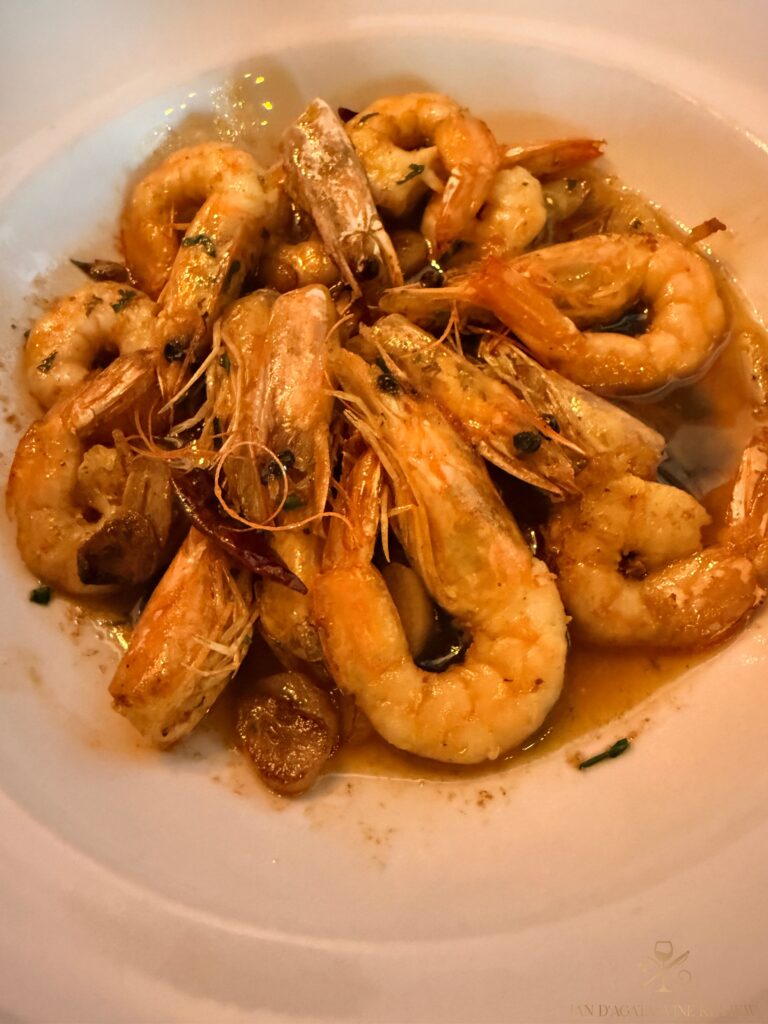
The second dish features the langostinos, Spanish for prawns. In fact, it’s not quite so straightforward. The menu uses the word langostinos rather than the more common gambas. In Spanish, the term langostinos usually refers to larger prawns with thicker flesh and a more concentrated flavor. The word itself derives from langosta (lobster), so langostino can be understood as a smaller crustacean somewhat reminiscent of lobster, and bigger than what we think of as prawns. However, in practice you will find the word gambas used much more commonly and indiscriminately throughout Spain, with not quite so much the attention for detail and accuracy used at Casa Santa Maria. The langostinos are served whole, still in their shells, and are simply prepared: quickly heated in olive oil with sliced garlic and a small amount of dried chili. The sauce is almost entirely composed of olive oil, the natural sweetness of the prawns, and the aroma of garlic, with little additional seasoning. This style of preparation is very common in Spain, often known elsewhere as gambas al ajillo. The key lies not in complex cooking technique but in temperature and timing. The crustaceans must be heated quickly over high heat so that the shells release their flavor into the oil while the meat remains firm and elastic. The garlic slowly turns golden in the oil, bringing out a gentle sweetness, while the dried chili adds only a faint warmth. The resulting sauce is direct and concentrated — essentially a combination of olive oil, seafood, and garlic. Dishes like this almost always lead diners to dip bread into the oil at the bottom of the plate, because that is where the flavor gathers most intensely.
In front of such a dish, Recaredo Subtil Brut Nature 2019 once again feels entirely natural. The acidity and mineral edge of the sparkling wine lightens the garlic oil, while the delicate bubbles make the sweetness of the prawns more vivid. Compared with Champagne, this Xarel·lo-based sparkling wine carries less of the buttery brioche weight and instead shows more mineral tension and a clean structure that fits Mediterranean cuisine particularly well.
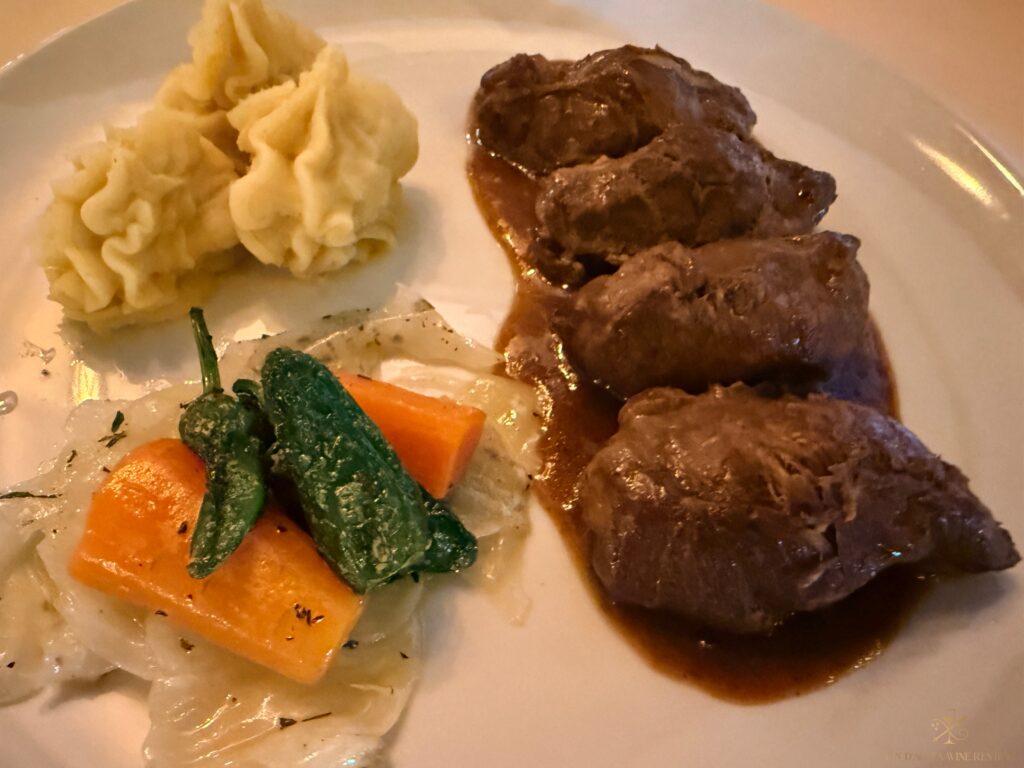
As the main courses arrive, the wine on the table changes to a red from Lanzarote, the Syrah wine El Grifo Reserva de Familia 2021. Unlike the heavier styles many people associate with Syrah, this wine is more restrained — the body is moderate, the acidity more pronounced, and a volcanic mineral character runs quietly through the structure. For this reason, it pairs naturally with both the rich, braised sauce of Carrillada Ibérica and the roasted aromas of Cabrito al horno.
The first main, Carrillada Ibérica (or Iberian pork cheek, in English) features the cheek muscle of the pig (cheek or carillada in Spanish) — a cut that is firm because it is a muscle that is constantly used by the animal, yet particularly suitable for slow braising. In Spanish cooking, pork cheeks are typically cooked for long periods until the collagen gradually breaks down, resulting in a texture such that the meat can almost be separated and cut with a fork. The Carrillada Ibérica on the plate arrives exactly in that state. The sauce is dark and concentrated, carrying the classic character of Spanish braised meat: savory meat juices, a slight caramelized sweetness, and the roundness that comes from slow cooking. Here, the El Grifo Reserva de Familia proves particularly fitting. The wine’s dark fruit and peppery notes echo the braised sauce, while its balanced acidity keeps the dish from feeling overly heavy.
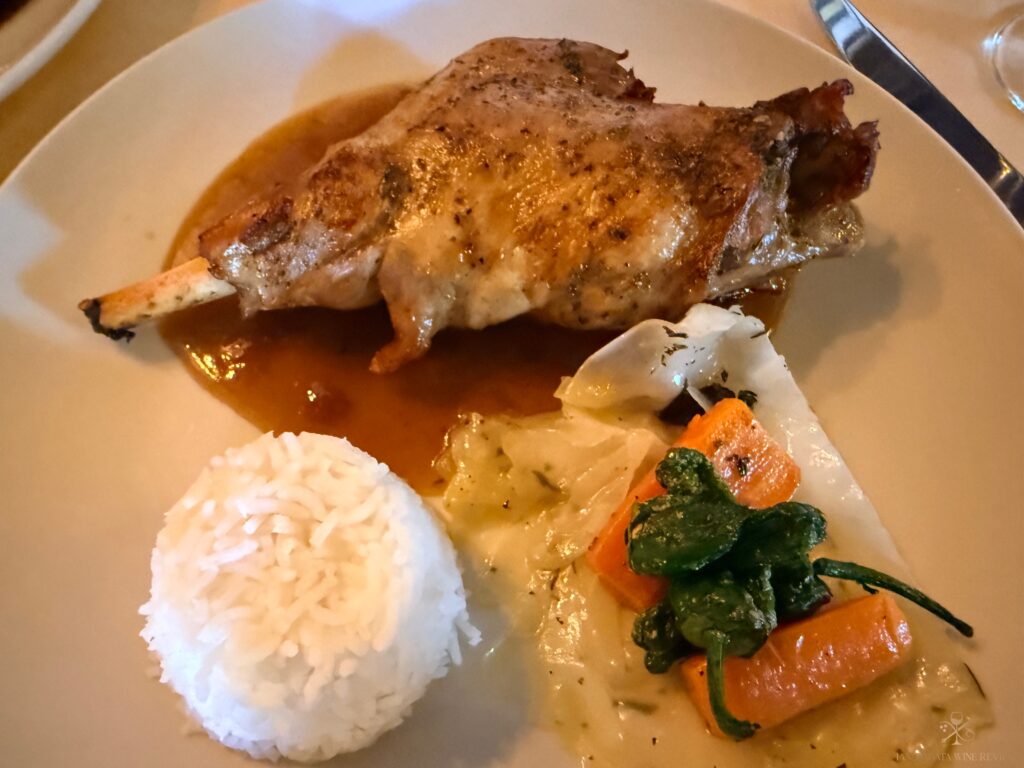
The second main course is even more rooted in local tradition: Cabrito al horno (or roasted young goat, in English). In the culinary traditions of the Canary Islands, goats have long been one of the most important livestock animals. The dry climate and poor soil make goats far easier to raise than cattle or sheep, and as a result goat milk and goat meat play a central role in local food culture. The word cabrito refers specifically to young goat, or kid, while al horno indicates slow roasting in the oven.
The cabrito arrives with a lightly golden, crisp surface, while the meat inside remains tender and juicy. Unlike many lamb dishes, young goat has a remarkably clean flavor, free of strong gaminess and instead carrying a delicate sweetness. At this point, the volcanic minerality and subtle smokiness of El Grifo Reserva de Familia 2021 align beautifully with the roasted aromas of the goat. Rather than overpowering the meat, the wine seems to sharpen the lines of the dish, giving it greater clarity.
If Carrillada Ibérica represents the deep flavors of Spanish slow-braised cooking, Cabrito al horno speaks more directly of Canary Islands food traditions. From the goat cheese in the opening salad to the young goat served as a main course, the dinner quietly forms a clear thread: a culinary relationship between the island and its goats that has endured for centuries.
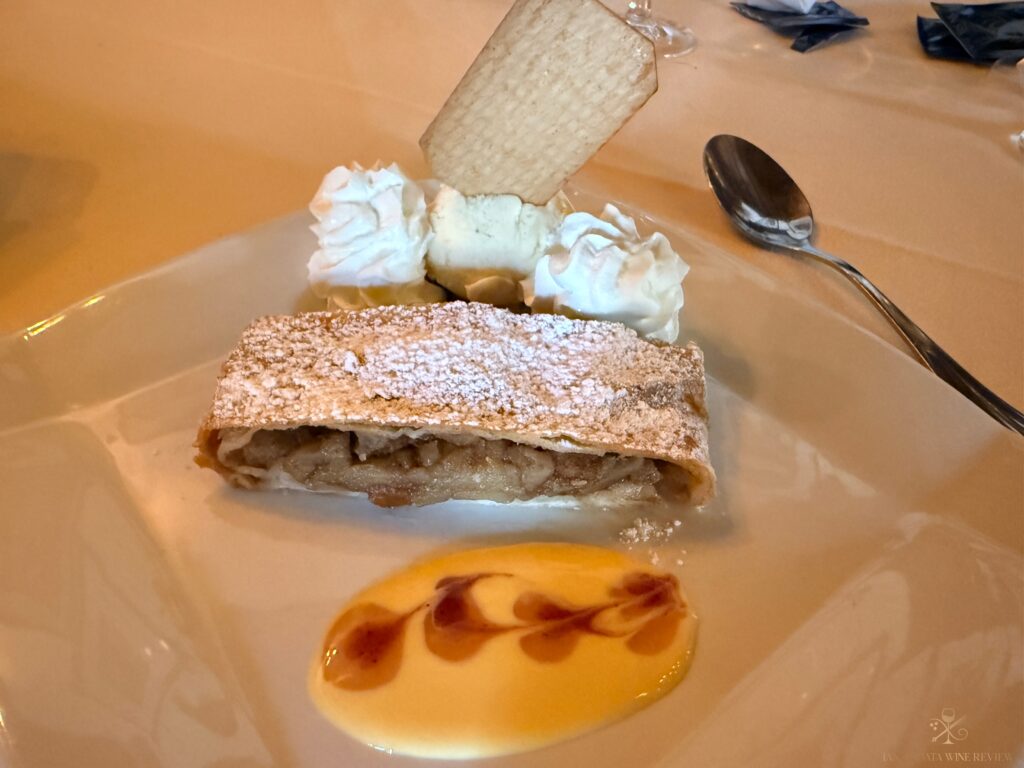
The meal concluded with Tarta de queso con helado de vainilla (or cheesecake with vanilla ice cream). The cheesecake is served warm, lightly dusted with powdered sugar. Once cut open, the interior reveals a soft, creamy texture, accompanied by a scoop of vanilla ice cream. The contrast between the warmth of the cake and the cold sweetness of the ice cream adds a gentle sense of balance. The dessert is not elaborate, yet it carries the unmistakable feeling of a classic European restaurant. Warm pastry, soft cheese filling, and the cool sweetness of ice cream create a layered finish that brings the meal back to a quiet and familiar rhythm.
At Casa Santa Maria, the cooking does not seem eager to demonstrate technical brilliance. Instead, it feels like the continuation of a long-established dining order: simple, restrained, and patient.
The Wines in this report