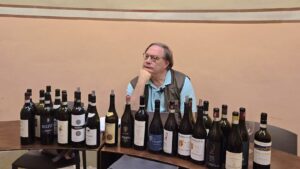
On Monday, March 9, Ian D’Agata guided two masterclasses on Italian and German wines in Toronto’s (Canada) beautiful Vintage Conservatory, a private wine club. The first masterclass, “Native Italian History in a Wine Glass: from North to South, Ian D’Agata Digs Deep in Specific Native Italian Wine Grapes and Wines” featured wines made with the likes of Nebbiolo, Sangiovese, and Nero d’Avola, among others. Wines from all over the country, from Northern, Central and Southern Italy, were specifically picked by Ian, who carefully chose to highlight a mix of well-known and lesser-known wineries. Featured wineries included: GD Vajra and Luigi Baudana, which allowed a very in-depth look at two specific Barolo crus, Novello’s Ravera and Serralunga’s Baudana, but also Scarzello, who showcased the merits of the Barolo commune’s Sarmassa vineyard district (the most famous of that commune along with Cannubi). La Rasina, whose Rosso and Brunello wines express the terroir of their portion of Montalcino extremely well, presented two different Brunellos, Il Divasco and Persante, devoted to Sante and Vasco Mantegoli, two of the wineries most important past owners. Cadgal, a quality leader in Moscato Bianco production and one of Italy’s true, emerging wine stars well-known for its ten years old-plus library releases of Moscato Bianco wines as well as deep riverbed-aged wines; Piccinni, a large Tuscan family winery that owns many different estates (it has recently entered a partnership with the Barolo denomination’s Michele Mascarello winery in the commune of La Morra) who showcased the lovely, genteel Brunello from the Villa al Cortile estate (one of many within the Piccinni galaxy of wines) made in a different sector of the Montalcino terroir than that of La Rasina, and thereby offering a different aroma and flaopvur profile. Also from Piccini, a Chianti Classico Gran Selezione from the Fattoria di Valianossss that speaks of the unique terroir of Castelnuovo Berardega; Gemin, a standard-bearer for Prosecco DOCG or Superiore, who makes Prosecco wines from many old vines that showcase what the Glera and older varieties can do when farmed with care. Prosecco DOCG wines such as those by Gemin are made by way of an extreme mountain viticulture forcing pickers to climb very steep high-altitude slopes and work with rickety old vines; and last but not least, MiKale, another small-lot winery that is rapidly emerging as a future Italian wine star that makes delicious wines from varieties like Frappato and Nero d’Avola, allowing Ian to dig deep into Frappato and Nero d’Avola ampelography, viticulture and winemaking. Sixteen (16!) wines in the tasting that were extremely well-received by the over thirty wine professionals in attendance.
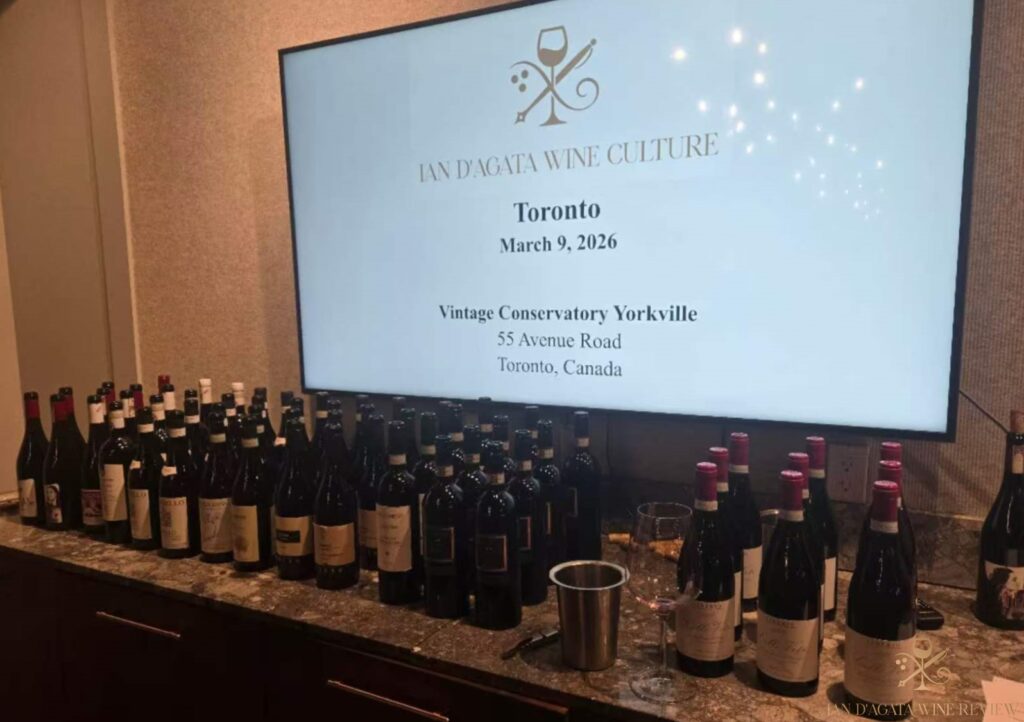
Next up, a fantastic masterclass “Tiberio, Castello di Ama and Castell: three leading wineries from Italy and Germany compare wines” that highlighted the great quality wines produced by three estates that long flew somewhat under the radar mostly because of their grape varieties that are not as popular as the ubiquitous Chardonnay and Cabernets and wines such as Chianti Classico that were not as famous as Barolo and Bordeaux. Tiberio of course has made a name for herself with her world-class Fonte Canale wine, a 100% Trebbiano Abruzzese that is one of the best white wines of Italy, and now matched in quality by the remarkably great Pecorino single-vineyard wine called Quarmarì. In NYC, Tiberio showed her classic wines, but also poured a mini-vertical of one of her single-vineyard cru wines,the Monntepulciano d’Abruzzo Colle Vota from 2021, 2019 and 2018. Germany’s famous Castell winery (or Fürstlich Castell’sche Domänenamt in German) in the beautiful Franken wine region is a remarkably important and historic German family-owned winery always under the helm of the noble family of Castell, that spans more than twenty-six generations, and is justly famous, as is the Franken in general, for world-class Silvaner wines (though the winery also makes excellent wines from other varieties too). One of Germany’s, and the world’s oldest wine estates founded in 1057, Castell was the first estate to plant Silvaner in the Franken back in 1659, turning the Franken it was is now known as the Silvanerheimat (“home of Silvaner”). The Castell 2001 Silvaner Schlossberg GG was the star of the day, a 25 years old white wine that left people in disbelief: many of the attendees actually asked if there had been a typo on the tasting sheet and if it was 2021 instead. Castello di Ama is considered by most experts today as Chianti Classico’s leading wine estate and the one that truly deserves the credit for having put single-vineyard Chianti Classico wines on the world wine map. Ama is famous for at one point bottling as many as four different Chianti Classico single-vineyard wines and the two they still bottle today, the Vigneto La Casuccia and the Vigneto Bellavista are among Italy’s 30 greatest red wines.
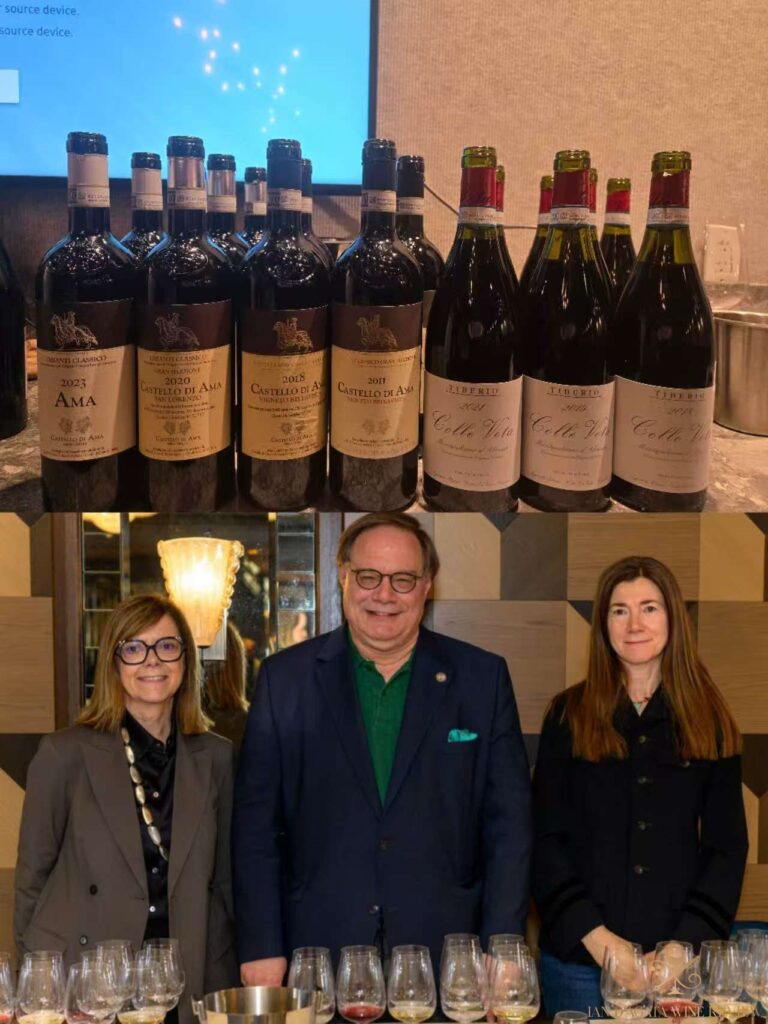
Tiberio, Castello di Ama and Castell work in very much the same way, with the expression of terroir through old vines and biotypes and their high-quality wines being their foremost goals. This much was evident to all those in attendance, and the high-ranking sommeliers and importers present at the tasting came away suitably impressed with the outstanding wines poured on the day. The parting message from all the attendees was that wine education is key and that Ian D’Agata is the truly believable Italian wine expert in this field as he has always dedicated his life to it, whereas others are now getting into the act looking to cash in as best they can. But as the attendees concluded “… with a level of teaching like that we received today, we look to do this again soon”.
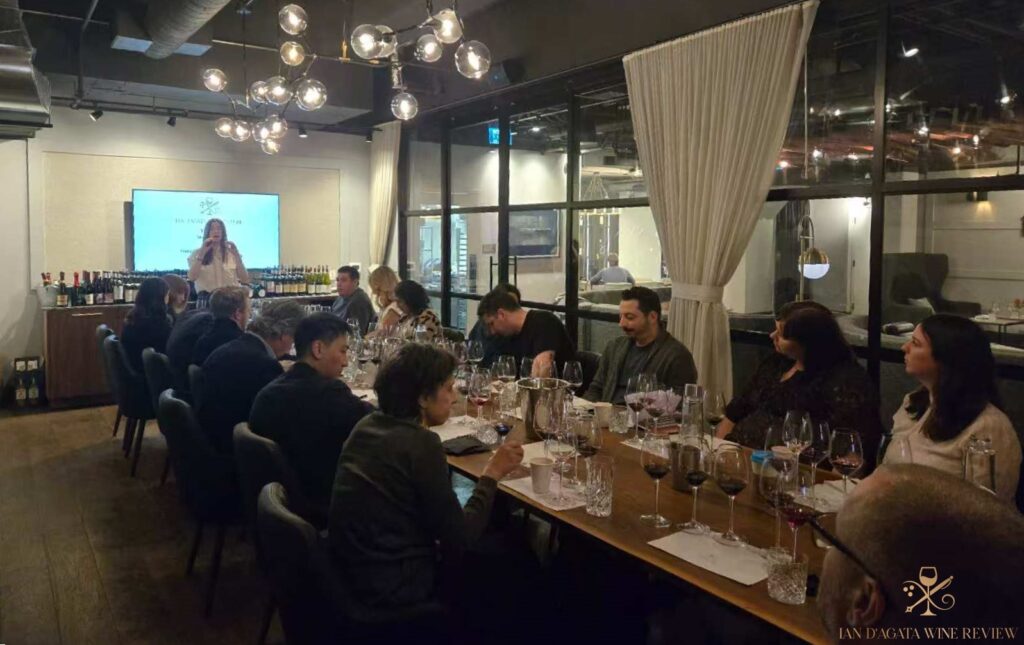
The day finished with the awarding of three of Ian D’Agata’s textbooks (The Grapes and Wines of Italy; Italian Wine Terroirs; and Barolo Terroir) based on who in the audience would correctly answer first a specific question related to the wines that had been discussed and tasted on the day.